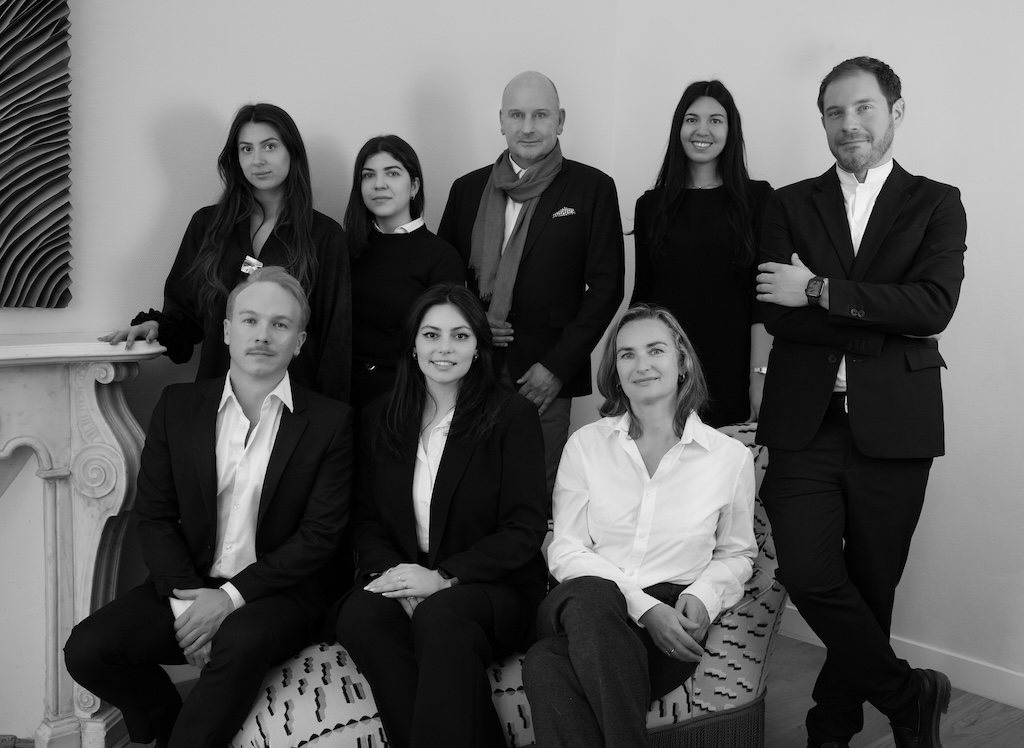
Behind the Design: Bjarni Breidfjord on Building Luxoria Interiors
There is a point in every interior design project where the drawings, material samples and ideas have to become something real. For Bjarni Breidfjord, founder of Luxoria Interiors, that transition between vision and execution has been central to the company’s approach since its beginnings in 2007.
Recently, Bjarni sat down for a podcast conversation at Luxoria’s offices in Nice with one of the French Rivera’s most prominent realty voices Jameson Farn, discussing the realities of running a luxury interior design studio, working with demanding projects across France and beyond, and the thinking that goes into creating interiors around the people who will ultimately inhabit them.
It was a conversation that offered a useful perspective on what happens behind the finished photographs of a project.
Design is only part of the equation
Luxury interiors are often presented through their final details: a carefully chosen material, a piece of furniture, an architectural feature or a perfectly finished room. But getting to that point involves considerably more than aesthetics.
At Luxoria, design sits alongside project management, technical coordination, sourcing, budgeting, permitting and the practical realities of construction. The studio works across residential, hospitality and commercial projects, with experience spanning the French Riviera, Monaco, Paris and international locations.
For Bjarni, understanding the wider picture is fundamental. A client’s initial idea needs to be translated into something that works architecturally, technically and practically, without losing the character that made the idea compelling in the first place.
That process can be particularly important on the French Riviera, where projects frequently involve older properties, complex regulations, local planning requirements and extensive coordination between different trades and specialists.
Listening before designing
One of the themes that came through strongly during the conversation was the importance of understanding the client. A successful interior is not simply a demonstration of what a designer can create. It needs to reflect the people using it: how they live, what they value, how they entertain, how they move through a space and what they want the property to become.
This is where the design process becomes less about imposing a particular aesthetic and more about interpretation. Bjarni’s approach has always involved looking at the larger picture, from the initial concept and planning stages through to the details that determine how a finished interior feels. As Jameson Farn notes in his recent feature on Luxoria, that combination of creative vision and strategic thinking has been a defining part of Bjarni’s approach to projects.
From the Riviera to an international portfolio
Luxoria’s story has developed considerably since its first project: the renovation of a large family villa in Mougins in 2007. Over the years, the studio has expanded into hospitality, commercial interiors, restaurants, yacht interiors and private aviation, alongside its residential work.
More recently, the studio has worked on projects including a bespoke spa at The Ritz-Carlton Geneva La Vallée, a private jet, a boutique hotel in West Sussex and high-end residences across Monaco and the French Riviera. Yet the underlying principle remains much the same: ambitious design needs to be supported by equally rigorous execution.
A conversation about what happens behind the scenes
Perhaps the most interesting aspect of the podcast was that it moved beyond the finished interiors and into the less visible side of the profession. The relationships, decisions, problem-solving and technical knowledge required to deliver a complex project rarely make it into a portfolio photograph. They are, however, what ultimately determine whether an ambitious design can become a successful finished space. For Luxoria, that balance between creative ambition and practical expertise has shaped the studio for almost two decades.
The podcast offers an opportunity to hear Bjarni discuss that process in his own words, as well as some of the experiences and ideas that have shaped Luxoria along the way.
Listen to the full conversation [HERE].