
E-1027: Eileen Gray’s Humanist Vision of Modernism
Overlooking the Mediterranean at Roquebrune-Cap-Martin, a small white villa stands as one of the most remarkable works of modern architecture. It is also the setting for a story of artistic appropriation, gender and the long struggle to recognise the woman who designed it.
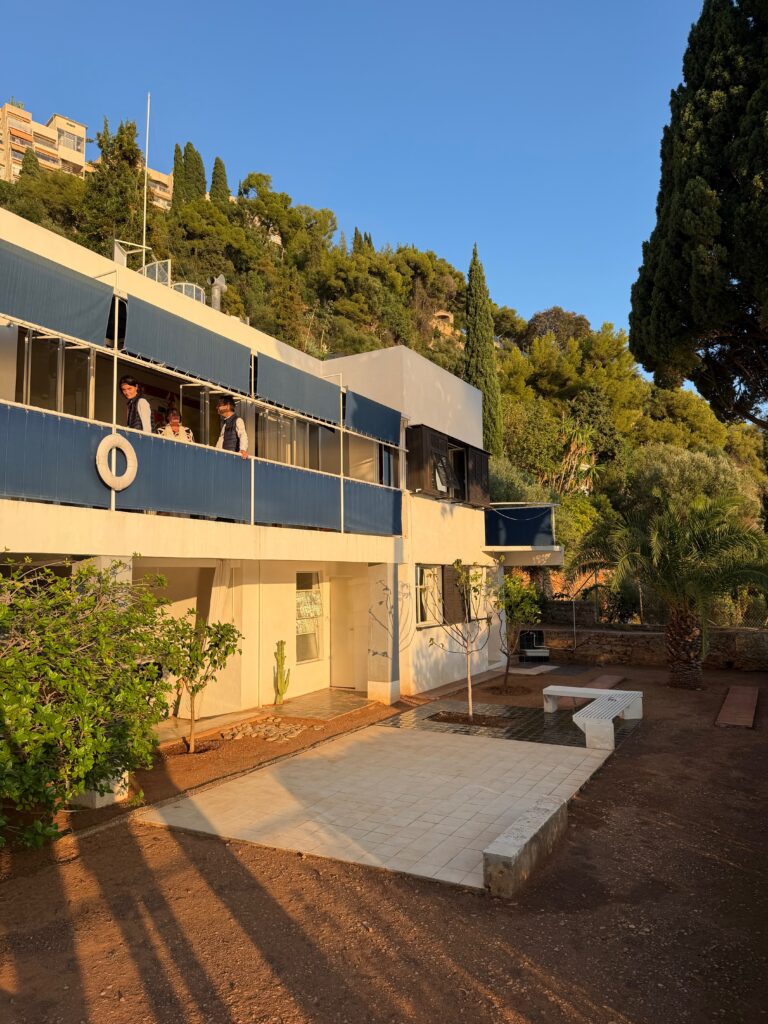
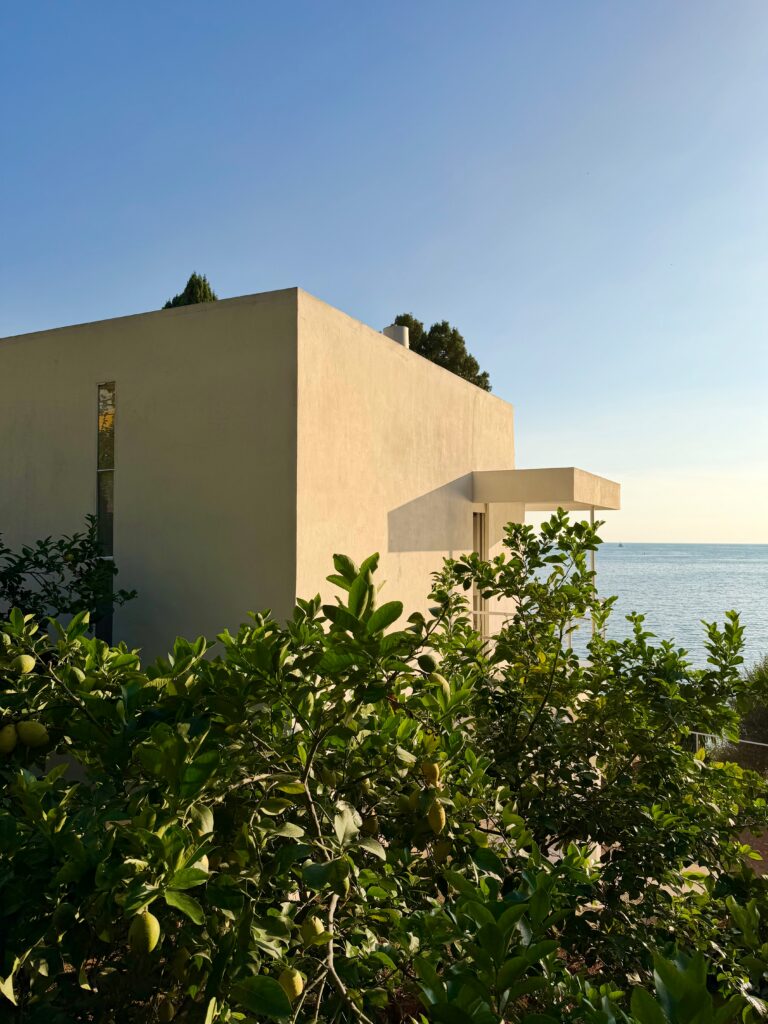
There is something quietly radical about E-1027. Set into the rocky hillside above the Mediterranean, the villa appears almost modest from the outside. Its white surfaces, horizontal windows and precise geometry belong unmistakably to the language of modernism. Yet step inside and a different sensibility emerges. The rooms are intimate. Furniture responds to the body. Screens move, shutters open, light changes throughout the day, and the boundary between the house and the landscape remains deliberately fluid. This is modern architecture designed for the experience of living.
Completed in 1929, E-1027 was created by Irish designer Eileen Gray, working in close association with the Romanian-born architect Jean Badovici. Its name encodes their intertwined initials: E for Eileen, 10 for J, the tenth letter of the alphabet, 2 for B and 7 for G. The result became a defining work of early modernism, although Gray herself would spend much of her life outside the architectural establishment that eventually celebrated the movement.
The villa’s history raises questions that remain relevant today. Who gets remembered as a pioneer? Who is permitted to define the work of another artist? And what happens when architectural history gives one celebrated man’s contribution more weight than the woman whose vision shaped the building in the first place?
Eileen Gray: An independent force in modern design
Born in County Wexford, Ireland, in 1878, Gray came from an affluent family with aristocratic connections. She studied art in London before moving to Paris in 1902, where she immersed herself in the city’s avant-garde artistic circles.
Her early career was established through furniture, interiors and lacquer work rather than architecture. Studying the traditional Japanese lacquer technique under craftsman Seizo Sugawara, Gray developed a distinctive approach that combined painstaking craftsmanship with bold geometry, unusual materials and a striking command of texture. Her work could be richly decorative without sacrificing clarity of form.
In 1922, she opened Galerie Jean Désert in Paris, where she exhibited and sold her own furniture and designs. Pieces such as the Bibendum armchair, the Transat chair and her lacquered screens demonstrated an ability to move between sculptural expression and practical use. She was already an accomplished designer before she turned her attention to buildings.
Gray’s importance lies partly in this refusal to observe the boundaries between disciplines. She understood that a room could not be conceived independently of its furnishings, just as an object could not be fully understood without considering the person using it. Her designs anticipated an increasingly integrated approach to interiors, in which architecture, furniture, lighting, materials and everyday routines form a coherent whole.
Her personal life also placed her outside the conventions of her time. Gray had relationships with both men and women and moved within Parisian circles that included prominent lesbian artists and intellectuals. Today, she is an important figure in feminist and queer histories of design, although her sexuality should not be treated as the sole explanation for her work.
What makes Gray particularly significant is her independence. She developed her own ideas rather than becoming a spokesperson for a single movement. In a profession dominated by men, she established an international reputation through the quality of her work while remaining difficult to categorise. For a designer who would eventually create one of modernism’s most influential houses, she also had no conventional architectural training.
A house designed around the human experience
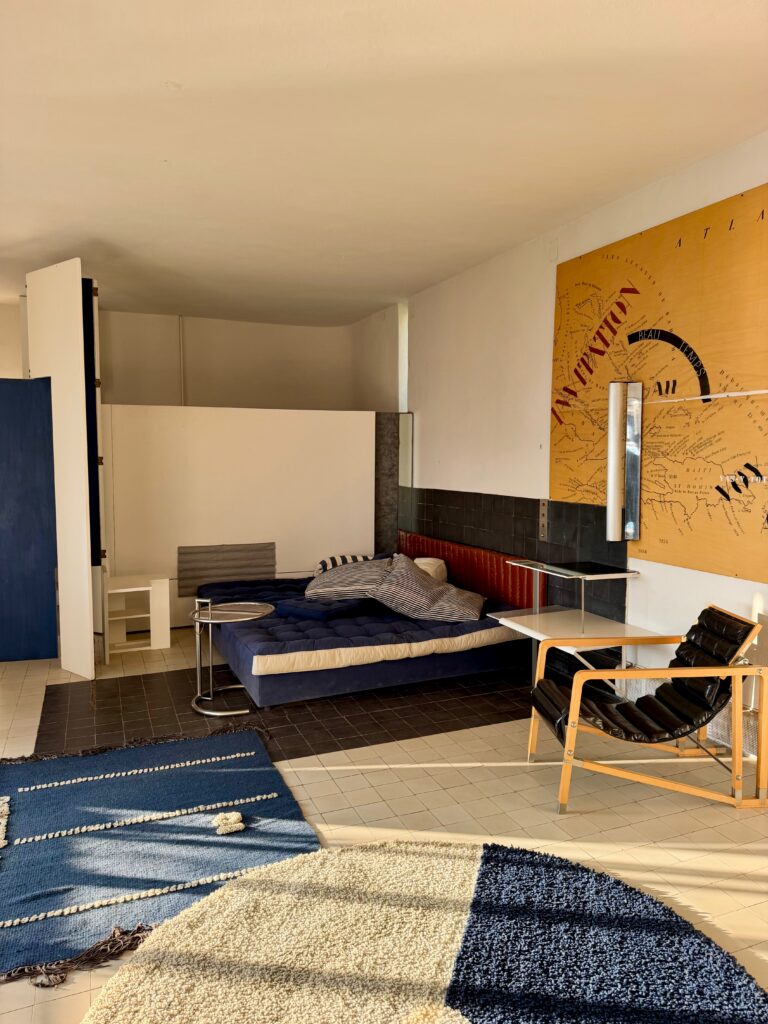
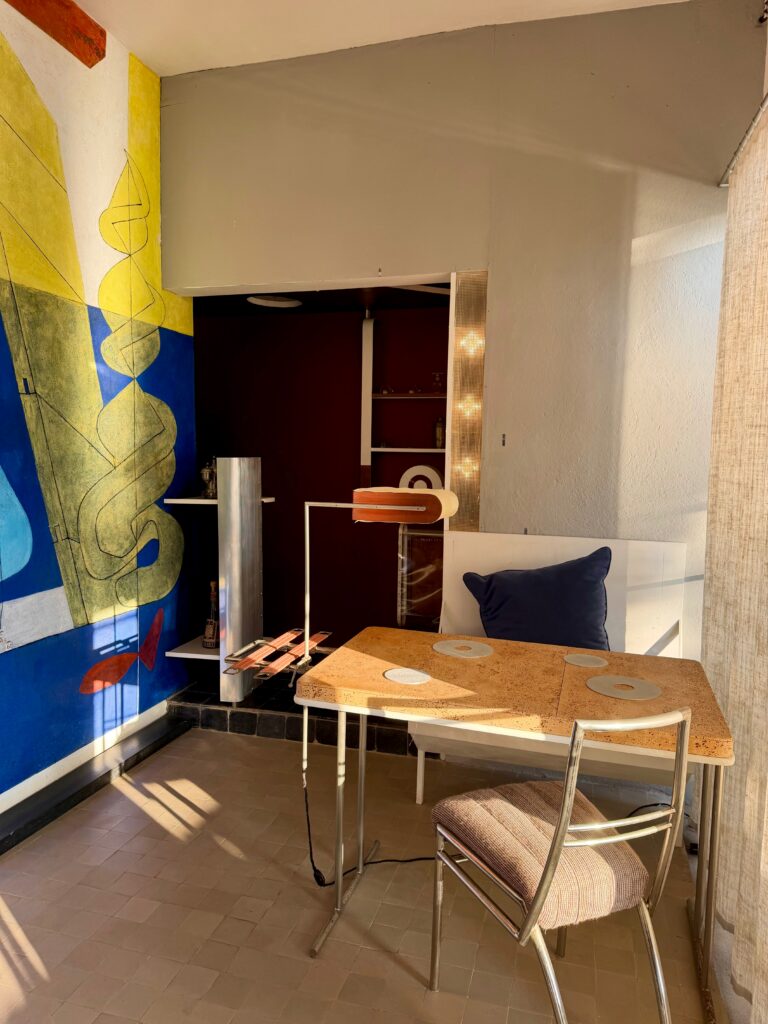
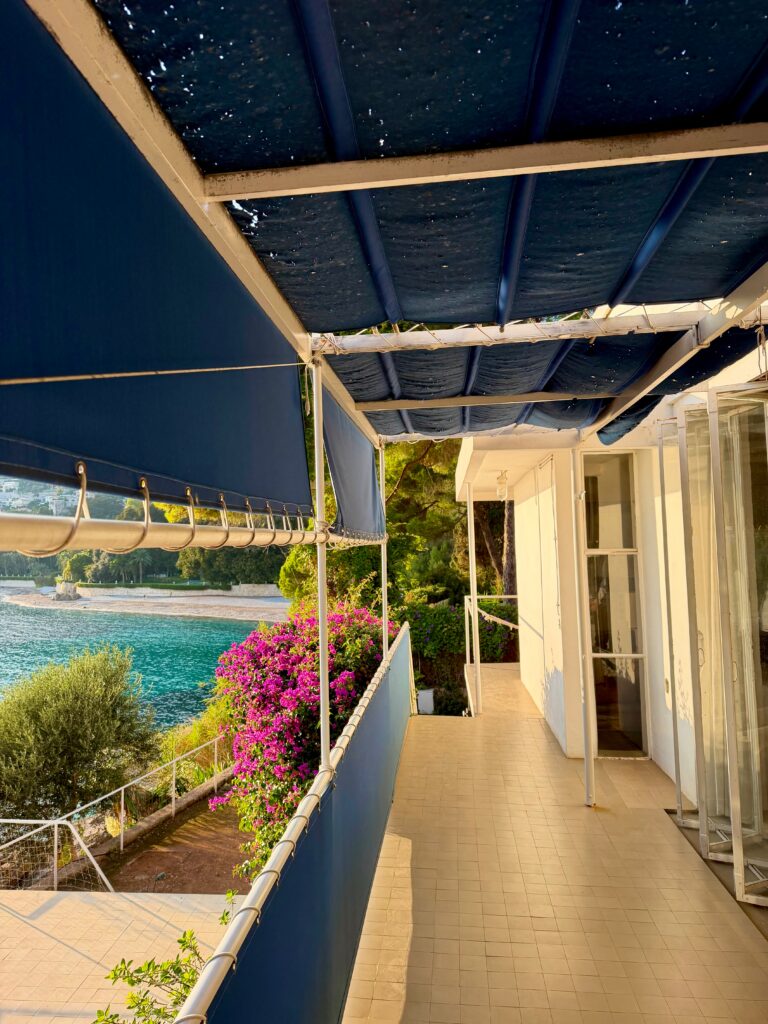
Gray and Badovici discovered the site at Roquebrune-Cap-Martin in 1925. Construction followed between 1926 and 1929, producing a summer residence primarily intended for Badovici. Although the house was a collaborative undertaking, Gray was chiefly responsible for its design and oversaw its construction, with Badovici contributing technical knowledge.
E-1027 adopts several principles associated with modernist architecture: pilotis supporting the building, a roof terrace, horizontal strip windows and a relatively open relationship between structure and interior. These are closely associated with Le Corbusier’s architectural theories, which helped establish a new language for twentieth-century buildings.
But Gray’s use of modernist principles differed in emphasis. She was interested in what a building made possible for its occupants, not simply in the purity of its forms.
The villa was carefully adapted to its exposed coastal setting. Gray studied the movement of the sun and the prevailing winds, positioning openings and terraces to make the most of the Mediterranean climate. Its nautical references extend beyond the name and appearance of the building. Compact furniture, carefully considered storage and the arrangement of spaces evoke the efficiency of a well-designed boat.
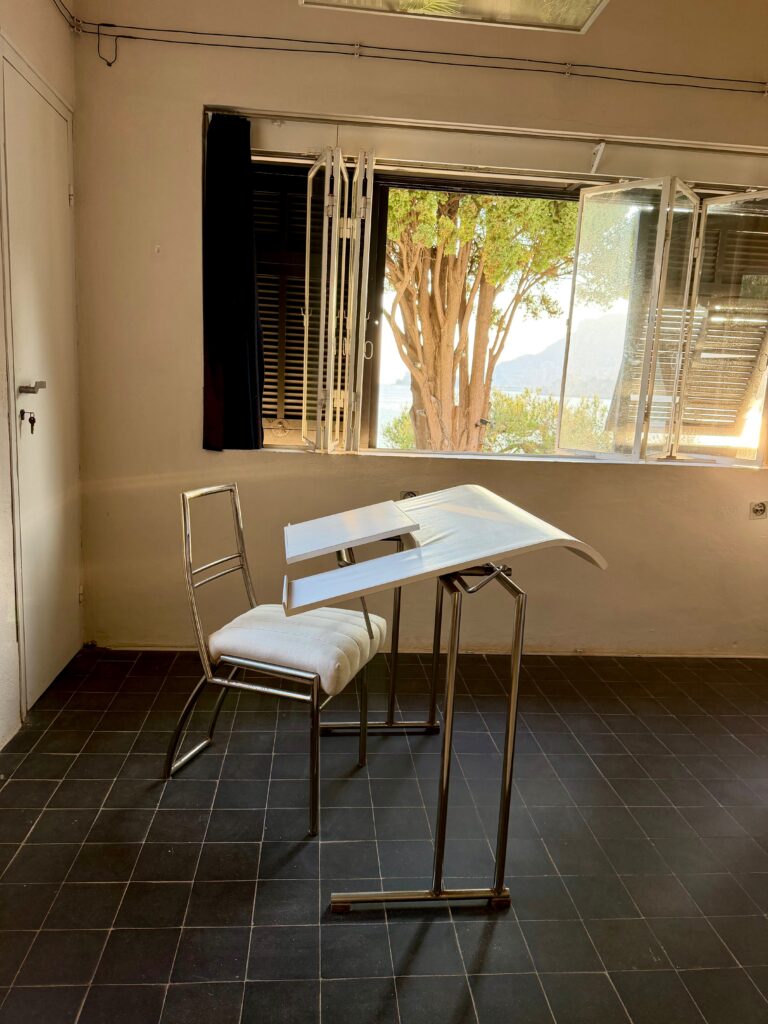
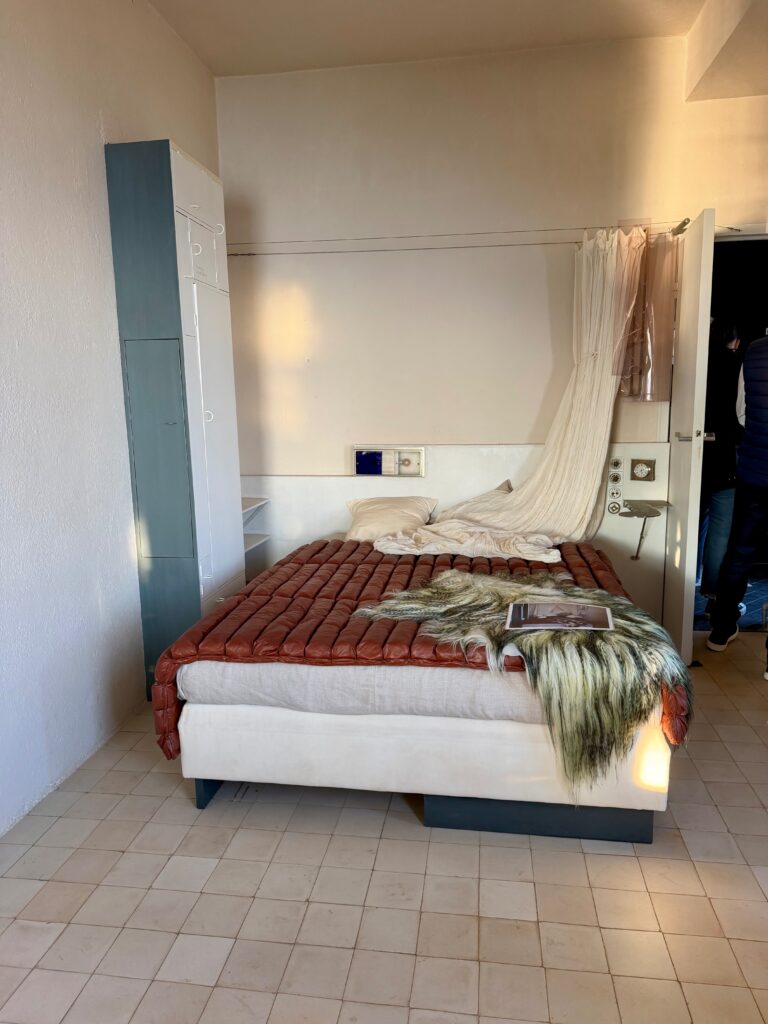
The interiors are equally precise. Built-in cupboards, movable screens, adjustable furniture and adaptable sleeping arrangements allow the rooms to respond to different activities. Furniture is integrated into the architectural composition, yet the occupants retain the freedom to alter their surroundings. The famous E-1027 adjustable side table is a particularly clear example of Gray’s thinking. Its tubular metal frame and adjustable glass top allow it to be positioned according to the needs of the person using it. It is elegant, but its elegance emerges from its usefulness.
These decisions may appear unremarkable in an era accustomed to flexible interiors and multifunctional furniture. In the 1920s, however, they represented a sophisticated way of thinking about domestic space.
Gray’s architecture recognised that people need privacy as much as openness, comfort as much as efficiency, and the freedom to arrange their environment according to their own habits. She resisted the assumption that modern living should be organised around an abstract architectural ideal. Her philosophy is captured in a statement associated with her work: “Formulas are nothing. Life is everything.” It is a concise expression of her contribution to modernism. For Gray, architectural innovation mattered because it could improve the experience of everyday life.
Le Corbusier and the question of artistic ownership
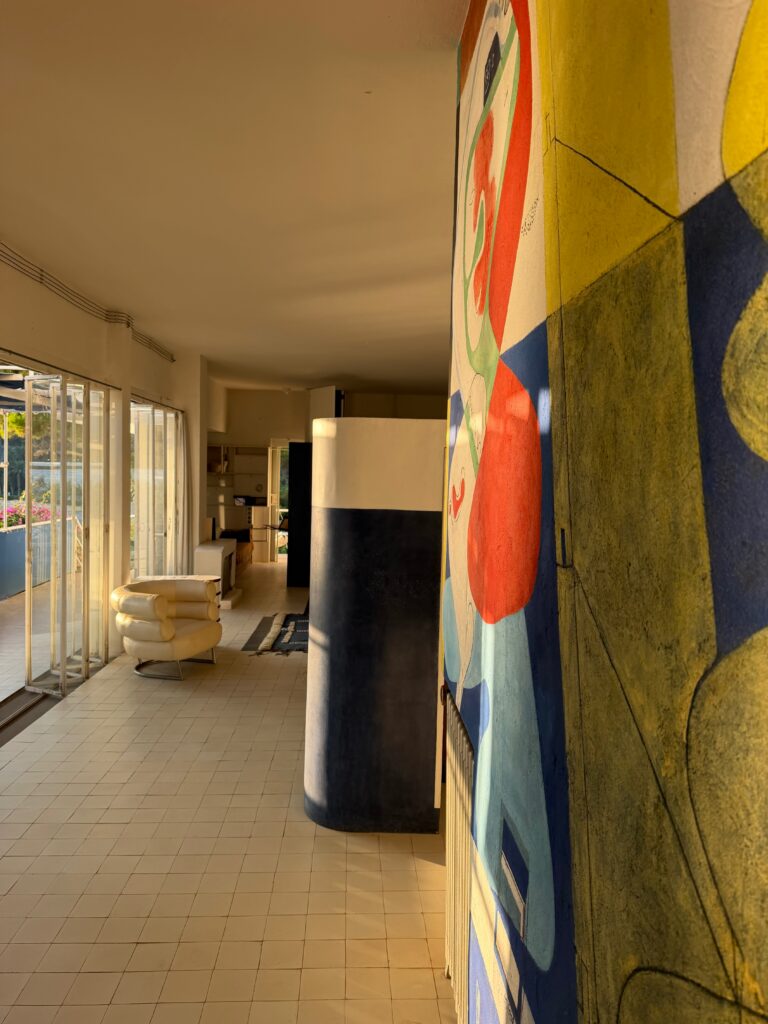
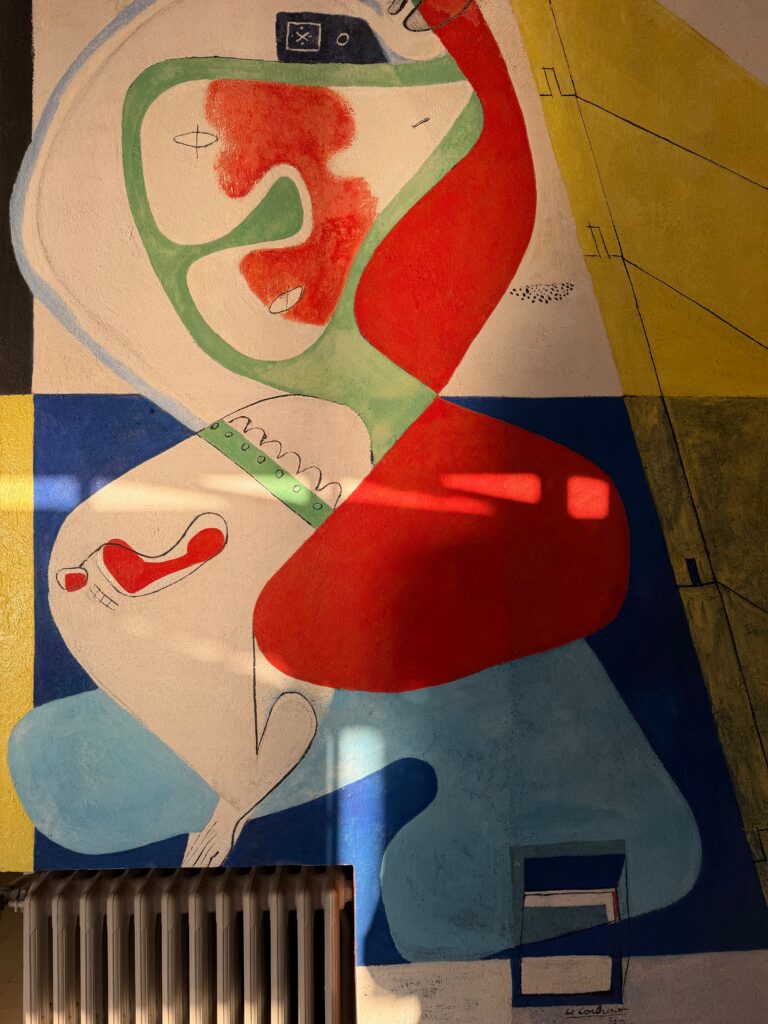
No account of E-1027 is complete without addressing Le Corbusier, one of the most influential and controversial figures in modern architecture.
The relationship between his work and Gray’s has become a source of considerable debate. E-1027 shares elements of the emerging modernist vocabulary that he helped popularise, yet Gray’s emphasis on personal experience and domestic intimacy offered a different interpretation of what modern architecture could achieve.
Le Corbusier visited the villa regularly. In 1938 and 1939, he painted eight large murals on its walls. Jean Badovici, who owned the house, agreed to the intervention. Gray, however, was not consulted.
That distinction matters. The murals were not simply an act of breaking into a building or painting without the owner’s knowledge. They were a far more complicated intervention into a work of architecture conceived as an integrated composition, undertaken without the agreement of its principal designer.
The murals brought large-scale figurative imagery into a house whose interior had been carefully orchestrated through colour, proportion, furnishings and the relationship between its rooms. For Gray, architecture was a complete work in which each element contributed to the experience of inhabiting the space. Le Corbusier’s additions challenged that integrity.
The episode has since been interpreted by feminist architectural historians as an act of appropriation. Gray’s biographer Peter Adam famously characterised the intervention in terms of violation, a comparison subsequently explored in academic writing on the relationship between artistic authority, gender and space. Such interpretations are influential, although Le Corbusier’s precise motives cannot be established with certainty.
The historical record provides other grounds for criticism. In 1948, Le Corbusier published photographs of his murals in L’Architecture d’Aujourd’hui. The publication referred to the building simply as a house at Cap Martin. Neither Eileen Gray nor the villa’s name appeared. The result was a familiar imbalance in architectural history: the intervention of the internationally celebrated male architect was documented, while the identity of the woman responsible for the original work was omitted.
This is where the story becomes particularly difficult to excuse. Le Corbusier was already an established figure in modern architecture. Gray had yet to receive comparable recognition for her own achievements. His work possessed the institutional authority that hers was still struggling to obtain.
Whatever his intentions in painting the murals, the decision to publish them without identifying Gray or E-1027 deserves scrutiny. It placed his artistic contribution before the public while obscuring the building’s authorship. The distinction between the two designers extends beyond the murals. Le Corbusier famously described the house as a machine for living. Gray, by contrast, wanted architecture to respond to individual needs, sensations and habits. Her approach accommodated the complexity of domestic life rather than insisting upon a predetermined way of inhabiting space.
There is a particular arrogance in treating another artist’s carefully considered work as an appropriate setting for one’s own signature, especially when that artist has been denied equal recognition. Le Corbusier’s stature should not exempt him from that judgement.
He subsequently built his celebrated Cabanon, a small timber cabin, on an adjoining plot in 1952. The cabin and E-1027 now form part of the same historic site. Their proximity creates an extraordinary architectural comparison, but it also reinforces the need to distinguish between the two men’s contributions and the very different histories of their reputations.
Why Eileen Gray matters as a feminist icon
The familiar story of modernism has often been told through a succession of celebrated male architects. Gray’s career exposes the limitations of that narrative. She was a pioneering designer who moved from furniture and interiors into architecture at a time when women had limited access to professional recognition in the field. Her work was exhibited and admired, yet she remained marginal to many accounts of modernist architecture during her lifetime.
A major retrospective of her work at the Royal Institute of British Architects in 1973 helped bring renewed attention to her achievements. Her reputation has grown considerably since then, supported by museum collections, scholarship and the restoration of E-1027.
Calling Gray a mother of modernism is an understandable way to recognise her contribution, although no single person can reasonably claim to have created an entire movement. Her importance is more specific, and perhaps more interesting: she helped develop a form of modernism that placed the individual at its centre.
Her interiors challenged rigid assumptions about how people should live. Movable partitions, adaptable furniture and carefully managed privacy offered alternatives to fixed domestic arrangements. The home became a setting that could respond to its occupant rather than dictate their behaviour.
This is also why Gray’s work has particular relevance to contemporary interior design. Flexibility, compact living, integrated storage, indoor-outdoor relationships and furniture designed around human needs are now familiar concerns. At E-1027, these ideas were already being explored with remarkable sophistication almost a century ago. Her legacy is not simply that she succeeded in a male-dominated profession. It is that she developed a distinct architectural philosophy, created a building of exceptional quality and left a body of work that continues to challenge established assumptions about modern living.
A house that history almost forgot
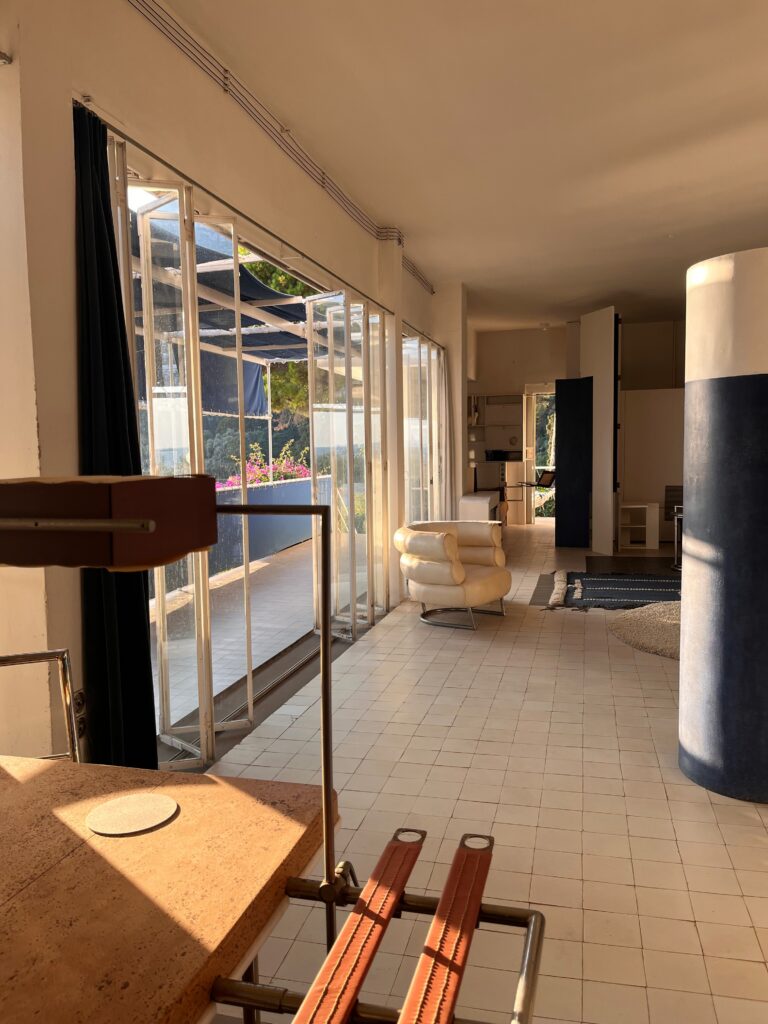
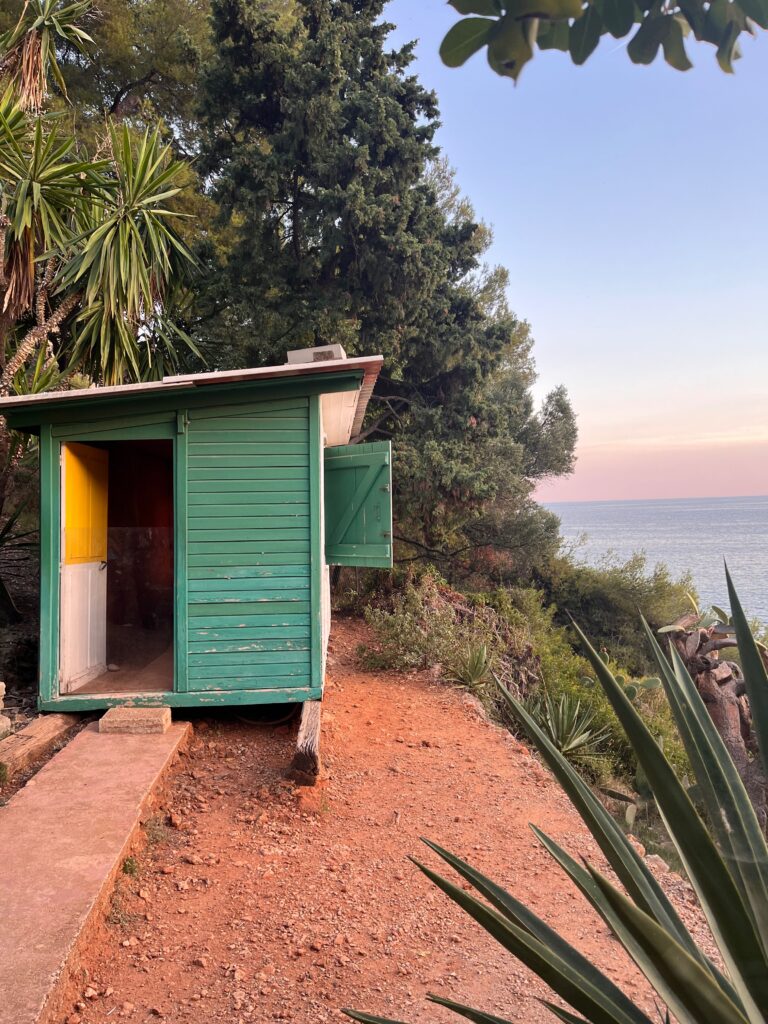
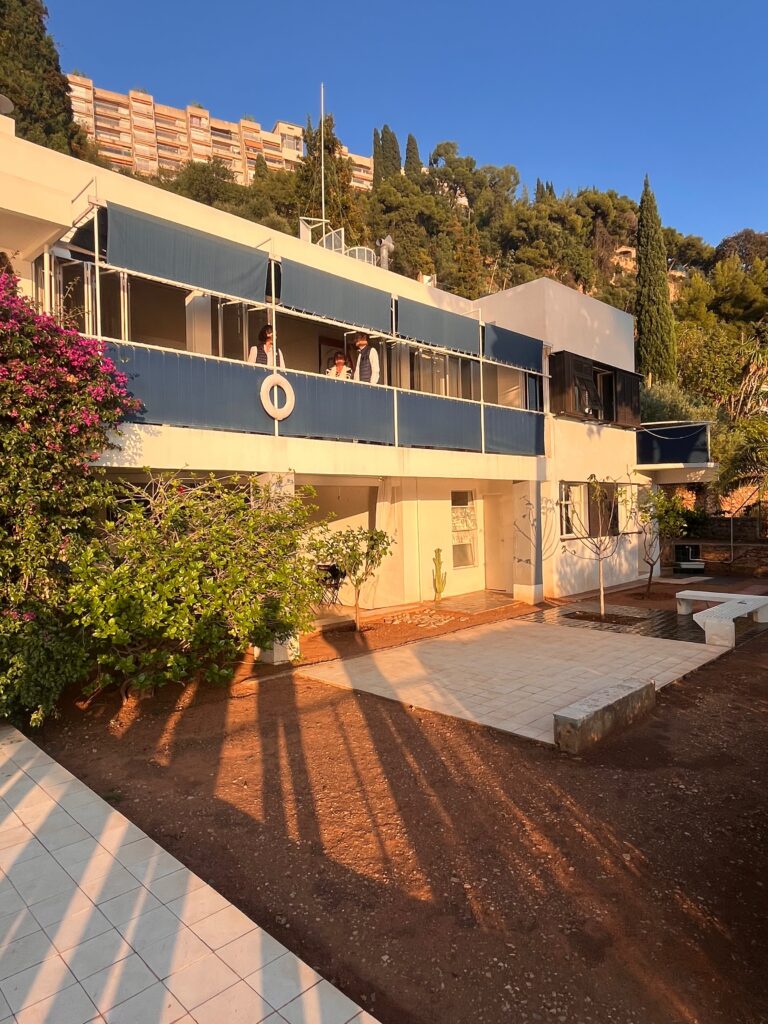
E-1027 endured decades of neglect and alteration after the Second World War. Its furniture was dispersed, and the building deteriorated. The history of its reception was complicated further by the prominence given to Le Corbusier’s murals and the wider tendency to overlook Gray’s authorship.
The villa was eventually restored through a major conservation project costing €5.5 million, completed in 2021. The work recovered its architectural details and recreated its furnishings as closely as possible to Gray’s original designs. The house is now open to visitors as part of the Cap Moderne heritage site, alongside Le Corbusier’s Cabanon and other buildings associated with the coastline.
The murals remain part of the site’s difficult history. Their preservation raises a familiar conservation question: should the evidence of a later intervention be removed to recover an earlier design, or retained because it reveals something important about the building’s past? At E-1027, the question cannot be separated from the people involved. Preserving the murals records what happened, but their significance depends on acknowledging the circumstances in which they were created and the woman whose architecture they altered.
To visit the villa today is to encounter more than a modernist landmark. It is to see how carefully Gray considered the relationship between space and life, how confidently she translated those ideas into architecture, and how easily a more powerful contemporary could overshadow her contribution.
The house deserves to be understood on its own terms. Its importance rests in the intelligence of its design, the quality of its execution and the particular vision of modern living that it represents. Le Corbusier’s presence forms part of its history, but it should never be allowed to define that history. His fame does not make his intervention beyond criticism, just as Gray’s relative obscurity during her lifetime did not diminish her achievement.
E-1027 remains a compelling reminder that architecture is shaped by more than form, structure or the reputation of its creator. It is also shaped by the lives people lead within it, the ideas they bring to their work and the stories later generations choose to remember. Eileen Gray understood this long before the world fully understood Eileen Gray. Almost a century after its completion, her house still makes the case for her vision.
To see more from us, our news stories and blog posts, follow the link HERE. Additionally, if you want to keep up to date with the progress on our projects you can follow us on Instagram. We regularly post updates on our international projects!