Hotel Byblos St Tropez: The Story Behind the Riviera’s Most Iconic Hotel
stories
Saint-Tropez occupies a unique place in the mythology of the French Riviera. What began as a modest Mediterranean fishing port evolved throughout the twentieth century into one of the world’s most desirable destinations, attracting artists, entrepreneurs, royalty and international tastemakers. While the harbour, beaches and winding streets contribute to its enduring appeal, few establishments are as closely intertwined with the story of Saint-Tropez as Hotel Byblos.
More than simply a hotel, Byblos has become a Riviera institution. For almost six decades, it has provided a backdrop to legendary celebrations, welcomed generations of notable guests and embodied a distinctive vision of Mediterranean hospitality. Its story is inseparable from the rise of Saint-Tropez itself.
From Fishing Village to Global Playground
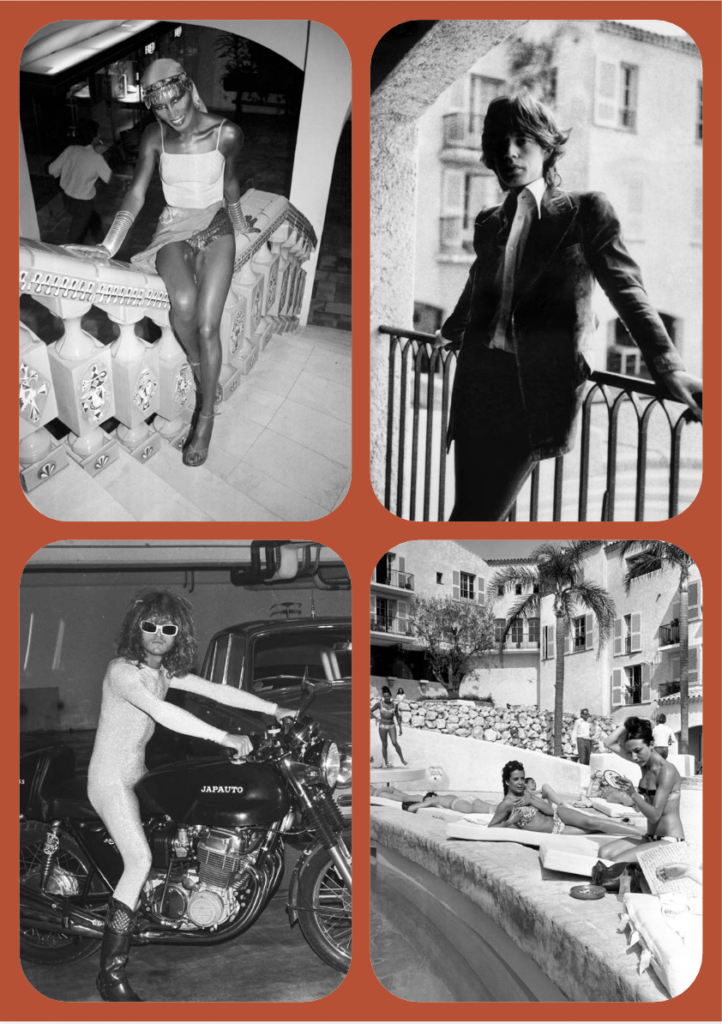
Imagery courtesy of Byblos Hotel
Long before superyachts filled the harbour and luxury boutiques lined the streets, Saint-Tropez was a working port whose economy revolved around fishing, maritime trade and agriculture. During the late nineteenth and early twentieth centuries, painters and writers were drawn to the area’s extraordinary light and relaxed atmosphere, laying the foundations for its reputation as a creative haven.
Following the Second World War, the town increasingly attracted visitors seeking an alternative to the formality of Cannes and Monaco. By the 1960s, Saint-Tropez had become synonymous with Mediterranean freedom, artistic expression and a new kind of international glamour. Its cafés, beaches and waterfront restaurants drew a growing mix of creatives, socialites, musicians and entrepreneurs.
Amid this transformation, one visionary entrepreneur imagined a hotel unlike anything the Riviera had seen before.
The Vision of Jean-Prosper Gay-Para
The story of Hotel Byblos begins with Jean Prosper Gay-Para, a Lebanese businessman who fell in love with Saint-Tropez and envisioned a destination that would combine the warmth of Mediterranean living with the sophistication of a world-class luxury hotel.
Construction began in 1966 on Avenue Paul Signac, beneath the Citadel and moments from Place des Lices. Rather than creating a traditional grand hotel, Gay-Para imagined an intimate Mediterranean village. Inspired by the ancient Lebanese city of Byblos, one of the oldest continuously inhabited cities in the world, the project was designed as a collection of colourful façades, courtyards, terraces and winding pathways that felt woven into the fabric of Saint-Tropez itself.
When Hotel Byblos officially opened on 27 May 1967, it immediately captured attention. The inauguration attracted international royalty, celebrities and cultural figures, establishing the hotel as one of the Riviera’s most talked-about new destinations almost overnight.
Its appeal lay in its atmosphere. Unlike many luxury hotels of the era, Byblos did not rely on grandeur or formality. It offered something far more personal: the feeling of arriving at an elegant Mediterranean home where hospitality came naturally and every detail felt considered.
A Family Legacy Begins
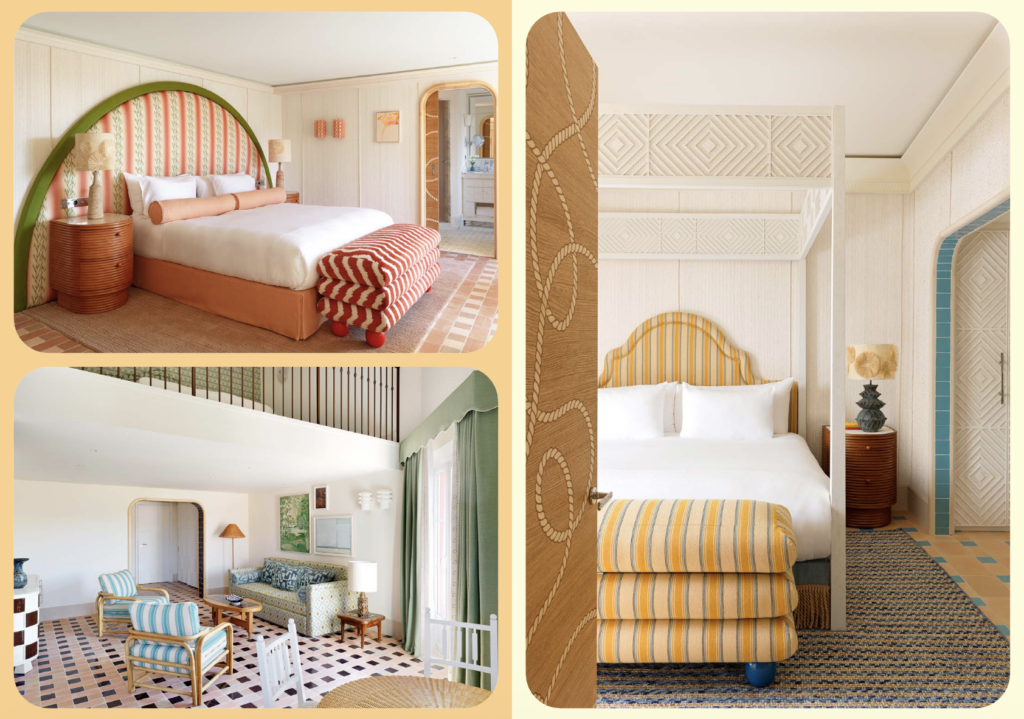
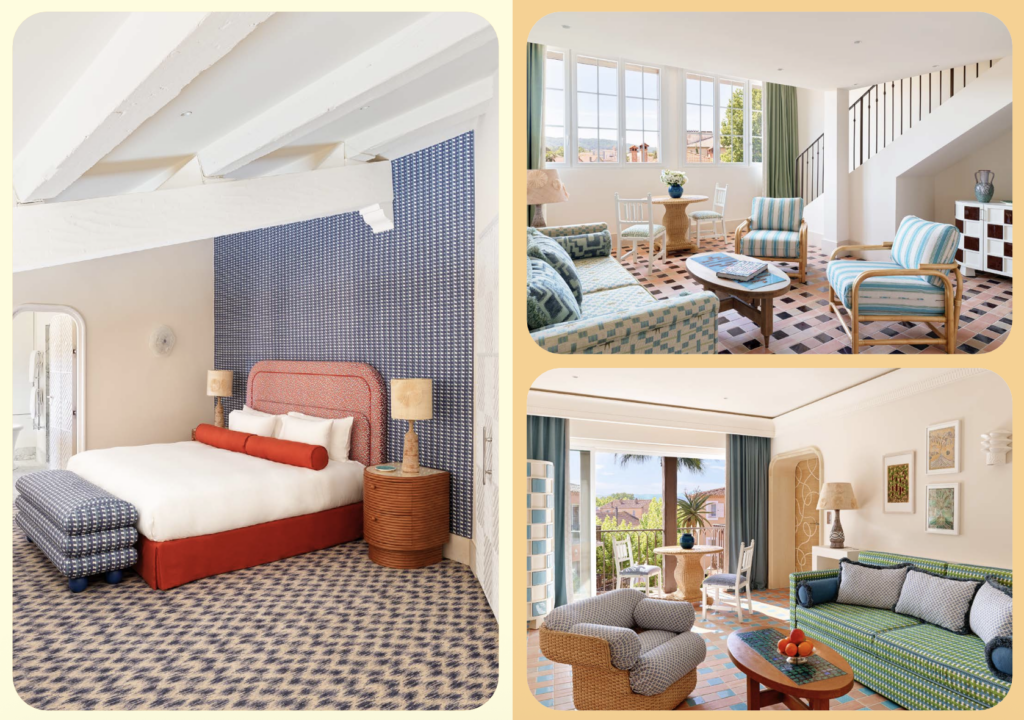
Imagery courtesy of Byblos Hotel
Just months after the hotel’s opening, global events dramatically altered its future. Following the outbreak of the Six-Day War, Gay-Para left the project and sold the property in September 1967 to French industrialist Sylvain Floirat. That acquisition would prove pivotal.
Nearly sixty years later, Hotel Byblos remains in the hands of the same family. Today, the property forms part of Floirat Signatures and is overseen by Antoine Chevanne, Sylvain Floirat’s great-grandson. Across four generations, the family has preserved the hotel’s independent spirit while continuously investing in its evolution.
This continuity is increasingly rare within luxury hospitality. While many celebrated Riviera hotels have changed ownership multiple times, Byblos has retained a clear identity rooted in genuine hospitality, personal relationships and a distinctly French art de vivre. It is one of the reasons guests continue to return year after year.
The Birth of a Legend
If the hotel itself helped define modern Saint-Tropez, its nightclub cemented its place in Riviera history.
Les Caves du Roy opened alongside the hotel in 1967 and quickly became one of Europe’s most coveted nightlife destinations. Few realise that the club was conceived as a recreation of the legendary Les Caves du Roy at the Excelsior Hotel in Beirut, a subtle tribute to Gay-Para’s Lebanese heritage and the cosmopolitan spirit that inspired the entire project. What followed became the stuff of Riviera legend.
For decades, Les Caves du Roy has remained one of the most celebrated nightclubs in the world. Alongside names such as Studio 54 in New York and the great clubs of Ibiza and Paris, it has earned a place in the history of international nightlife.
Summer evenings at Byblos became synonymous with glamour, spontaneity and celebration. Generations of guests arrived seeking the unique atmosphere that made Saint-Tropez famous, and many found it beneath the vaulted ceilings of Les Caves du Roy. Even today, securing a table during peak season remains one of the most sought-after experiences on the Riviera.
The Famous Faces of Byblos
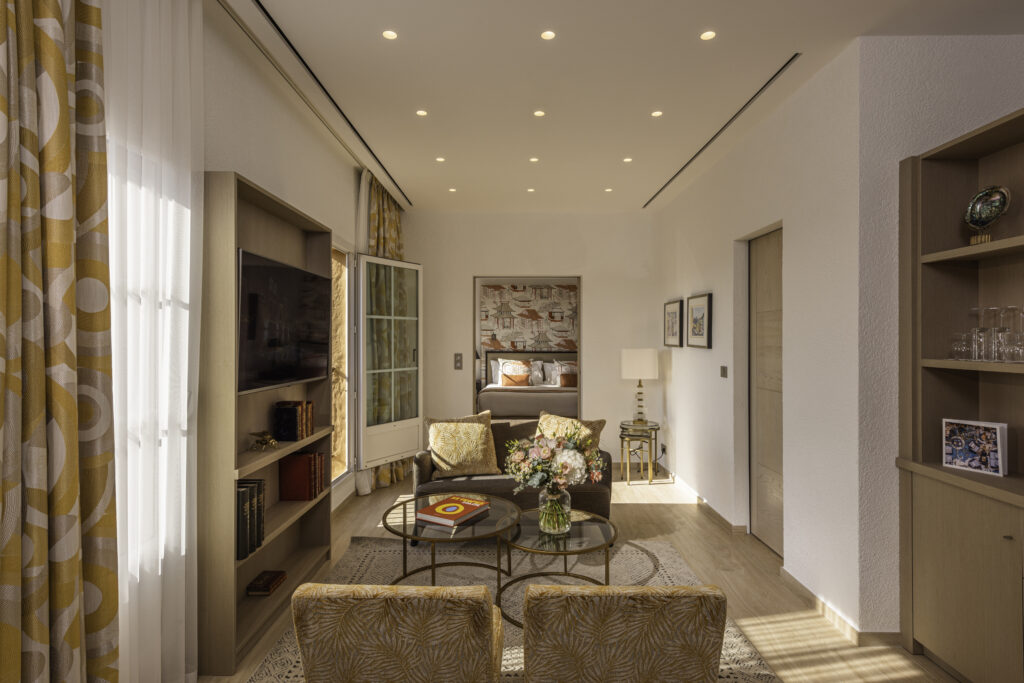
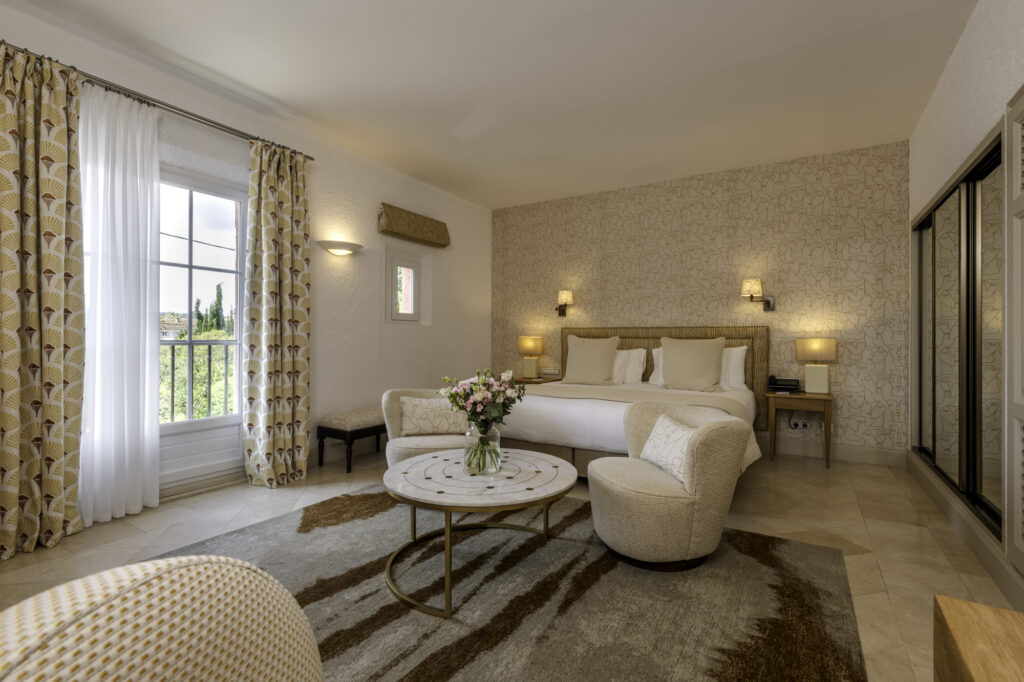
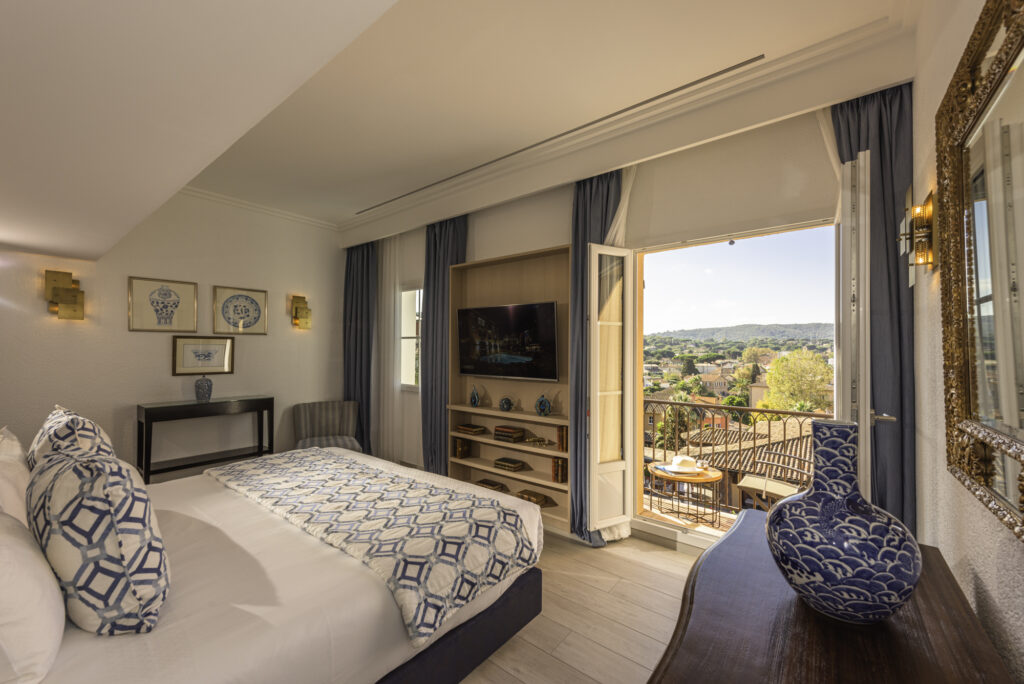
Imagery courtesy of Byblos Hotel
Part of Byblos’ enduring fascination lies in the remarkable cast of personalities associated with its history. In its early years, the hotel welcomed figures such as Elizabeth Taylor, Richard Burton, Duke Ellington and Romy Schneider, all drawn by the energy surrounding Saint-Tropez during the late 1960s and early 1970s.
One of the most famous chapters in the hotel’s history came in 1971 when Mick Jagger and Bianca Pérez celebrated their wedding with a memorable party at Les Caves du Roy before spending part of their honeymoon in the hotel’s Presidential Suite. The event helped cement Byblos’ reputation as one of the Riviera’s most glamorous social addresses.
Yet what distinguishes Byblos from many celebrity-frequented hotels is that its reputation has never depended solely on famous names.
Its real luxury has always been discretion. For decades, guests have returned because Byblos offers something increasingly rare: a place where privacy and conviviality coexist. The atmosphere remains vibrant and social, yet never intrusive. It is a balance that many hotels attempt to achieve and few truly master.
The Enduring Spirit of Saint-Tropez
Nearly sixty years after its opening, Hotel Byblos remains one of the defining symbols of the French Riviera. Its success cannot be attributed solely to architecture, location or celebrity associations. Rather, it stems from its ability to capture something elusive about Saint-Tropez itself: a combination of glamour, spontaneity, elegance and freedom.
Generations of guests have arrived seeking the magic of the Riviera and found it within the walls of Byblos. In doing so, they have helped transform a remarkable hotel into a cultural institution. As Saint-Tropez continues to evolve, Hotel Byblos remains what it has always been—a place where history, luxury and the enduring spirit of the Mediterranean meet.
To see more from us, our news stories and blog posts, follow the link HERE. Additionally, if you want to keep up to date with the progress on our projects you can follow us on Instagram. We regularly post updates on our international projects!