Pole Position: What the Monaco Grand Prix Reveals About Great Interior Design
The Monaco Grand Prix is often perceived as the pinnacle of motorsport glamour, a spectacle of speed set against the dramatic backdrop of the Mediterranean coastline. Yet beneath the surface of roaring engines and harbour-side yachts lies a quieter, more enduring narrative: one of precision, performance, and design excellence.
When examined through a design lens, the Grand Prix becomes more than a race. It becomes a study in how environments are engineered, experiences are curated, and excellence is measured in millimetres rather than metres. These same principles sit at the heart of exceptional interior design.
Precision as the Foundation of Excellence
In Formula One engineering, success is determined by marginal gains. A fraction of a second can separate victory from defeat, and every component is refined with obsessive attention to detail.
Luxury interior design operates under a similar philosophy. The alignment of joinery, the proportion of a room, the transition between materials—each element contributes to an overall sense of harmony. Nothing is incidental. Much like a Formula 1 car, a well-designed interior is the result of countless precise decisions, each one invisible on its own yet essential to the final outcome.
Performance Behind the Surface
A Formula 1 car is not designed to be admired at rest; it is designed to perform under extreme conditions. Every surface, material and mechanism serves a functional purpose, even when that purpose is concealed from view.
The same principle applies to high-end interiors. The most successful spaces are not necessarily the most visually complex, but the most intelligently resolved. Lighting schemes that adapt seamlessly to different times of day, acoustics that create calm within dense urban environments, and spatial layouts that support effortless movement—all contribute to an environment that performs as beautifully as it appears.
In this sense, true luxury is not decorative. It is functional elegance.
The Architecture of Experience
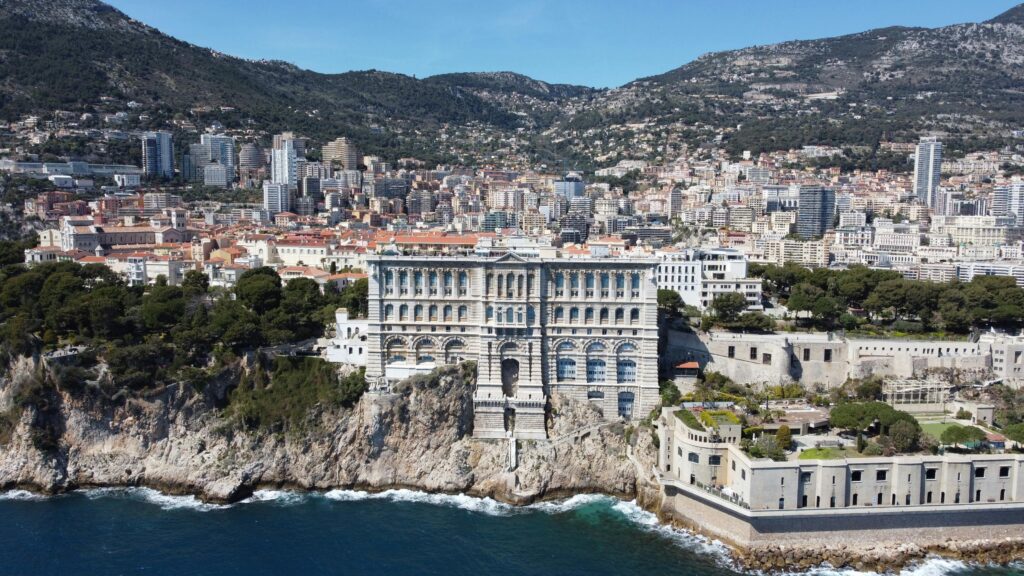
The Monaco Grand Prix transforms the city into a carefully choreographed environment. Streets become racetracks, terraces become viewing platforms, and buildings become part of a global stage. Architecture is no longer passive; it becomes active, participatory, and experiential.
Great interior design follows the same logic. It is not simply about creating rooms, but about shaping experiences within them. The way a guest enters a space, the sequence of movement from one area to another, and the framing of views all contribute to an emotional narrative.
Much like a driver navigating the circuit, inhabitants move through a designed environment that anticipates behaviour while allowing for freedom and fluidity.
Innovation and Craftsmanship in Balance
Formula 1 is a constant dialogue between cutting-edge innovation and human craftsmanship. Advanced materials, computational aerodynamics, and precision manufacturing exist alongside the intuition and experience of engineers and drivers.
Luxury interiors are defined by a similar duality. Bespoke joinery, hand-finished surfaces, and artisan techniques sit alongside advanced engineering solutions, smart systems, and high-performance materials. The most compelling spaces are those where these two worlds meet seamlessly, without hierarchy or conflict.
This balance ensures that innovation never feels cold, and craftsmanship never feels outdated.
Designing Emotion, Not Just Form
Ultimately, the appeal of the Monaco Grand Prix is not purely technical—it is emotional. The tension before a corner, the visual drama of cars threading through tight urban streets, the atmosphere created by the setting itself. It is an experience designed to be felt.
Interior design at its highest level aspires to the same outcome. Beyond aesthetics and function lies atmosphere: the intangible quality that defines how a space makes someone feel. Calm, energy, intimacy, grandeur—these are the true materials of design.
When these emotional responses are carefully orchestrated, a space becomes memorable in the same way a race becomes iconic.
Conclusion
The Monaco Grand Prix endures not only because of speed, but because of its perfection of detail, its integration with architecture, and its ability to transform environment into experience.
Great interior design operates on these same principles. It is precise, performative, experiential, and deeply human. When these elements align, the result is not simply a space, but a composition—carefully engineered, emotionally resonant, and timeless in its execution.
To see more from us, our news stories and blog posts, follow the link HERE. Additionally, if you want to keep up to date with the progress on our projects you can follow us on Instagram. We regularly post updates on our international projects!