Maison Albar – Le Victoria: A New Chapter in Nice’s Riviera Story
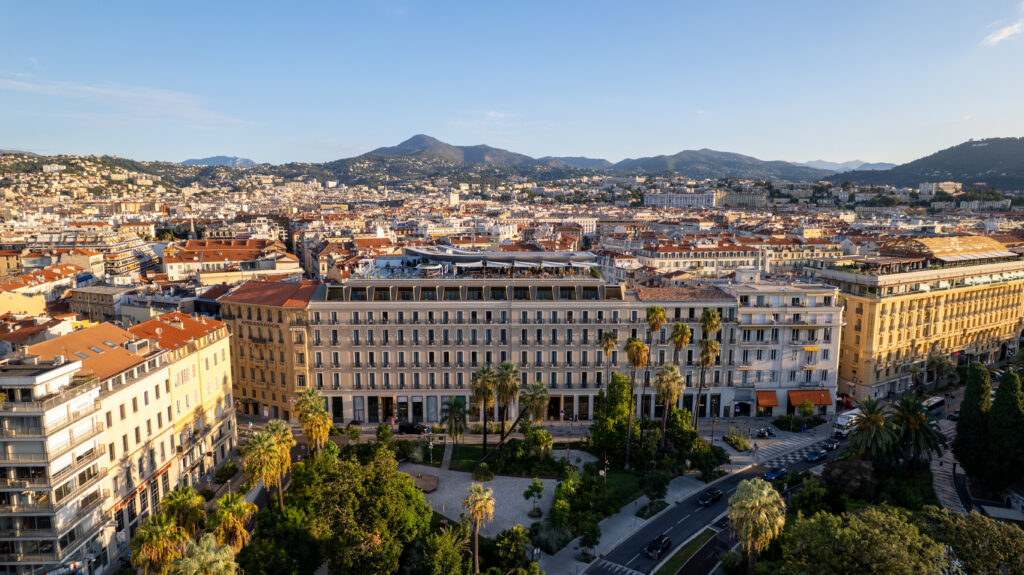
There was a time when Nice was the undisputed capital of winter on the French Riviera.
Long before Cannes became synonymous with cinema or Saint-Tropez with summer excess, Europe’s aristocracy descended upon the Bay of Angels in search of gentler climates, elegant promenades and the restorative qualities of Mediterranean light. English families built grand residences overlooking the sea, Russian nobility commissioned churches crowned with colourful onion domes, and monarchs transformed the city into one of the continent’s most fashionable seasonal destinations.
The traces of that extraordinary period remain woven into Nice’s streets today. Belle Époque façades stand beside Art Deco apartments, hidden gardens open unexpectedly behind grand boulevards, and the Promenade des Anglais continues to frame one of Europe’s most recognisable coastlines.
Yet, for many years, Nice existed in the shadow of its Riviera neighbours. Visitors often arrived through its airport before continuing west to Cannes or east towards Monaco, overlooking the city itself as little more than a gateway to the Côte d’Azur.
That perception is quietly changing.
Over the last decade, Nice has experienced something of a renaissance. The restoration of historic buildings, the arrival of ambitious restaurants, renewed investment in the city centre and UNESCO World Heritage recognition have encouraged travellers to look again. Rather than competing with the Riviera’s traditional glamour, Nice has rediscovered its own identity—one rooted in culture, history and an effortless elegance that feels increasingly relevant to modern luxury.
Few places encapsulate this new chapter more eloquently than Maison Albar – Le Victoria.
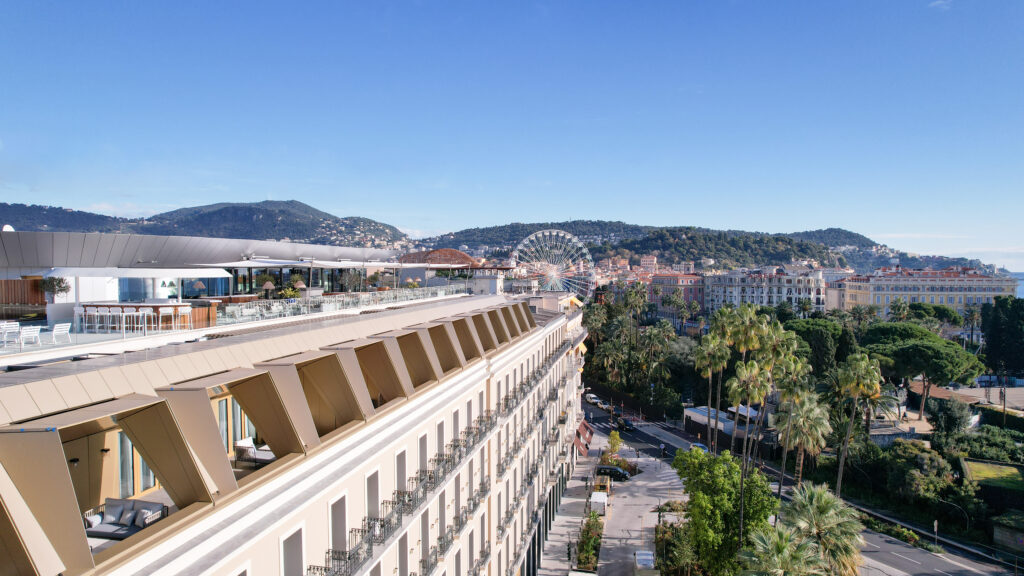
Standing between the Promenade des Anglais and Place Masséna, the hotel is far more than another five-star address. It represents the careful reinvention of one of Nice’s historic sites, where nearly two centuries of local history have been respectfully carried into the present.
A Historic Address Reimagined
Luxury hotels often speak about heritage. Few genuinely possess it.
The story of 6 Avenue de Suède begins in 1836, when the site first welcomed visitors as the Pension Anglaise. As Nice evolved throughout the nineteenth century, so too did the building itself, becoming the Hôtel d’Angleterre before later merging with the neighbouring Hôtel de Grande-Bretagne. By the twentieth century it had become known as the Park Hôtel, witnessing almost every major transformation of modern Nice from its privileged position beside the city’s expanding gardens and seafront.
Generations of visitors passed through its doors as the city around it matured from an elegant winter retreat into one of Europe’s great coastal destinations. When Maison Albar Hotels undertook the property’s redevelopment, the objective was never to erase that history.
Instead, the project sought to preserve its architectural memory while imagining what Riviera hospitality might look like for a new generation. The historic façade remains, quietly linking past and present, while behind it an entirely contemporary hotel has emerged—one that embraces today’s expectations without losing sight of the remarkable address it occupies.
It is an approach that feels increasingly rare within luxury hospitality, where heritage is often recreated rather than genuinely inherited.
Why “Victoria”?
Names matter. In luxury hospitality they often become shorthand for a property’s identity, carrying stories long before guests step through the front door. The name Victoria operates on two levels.
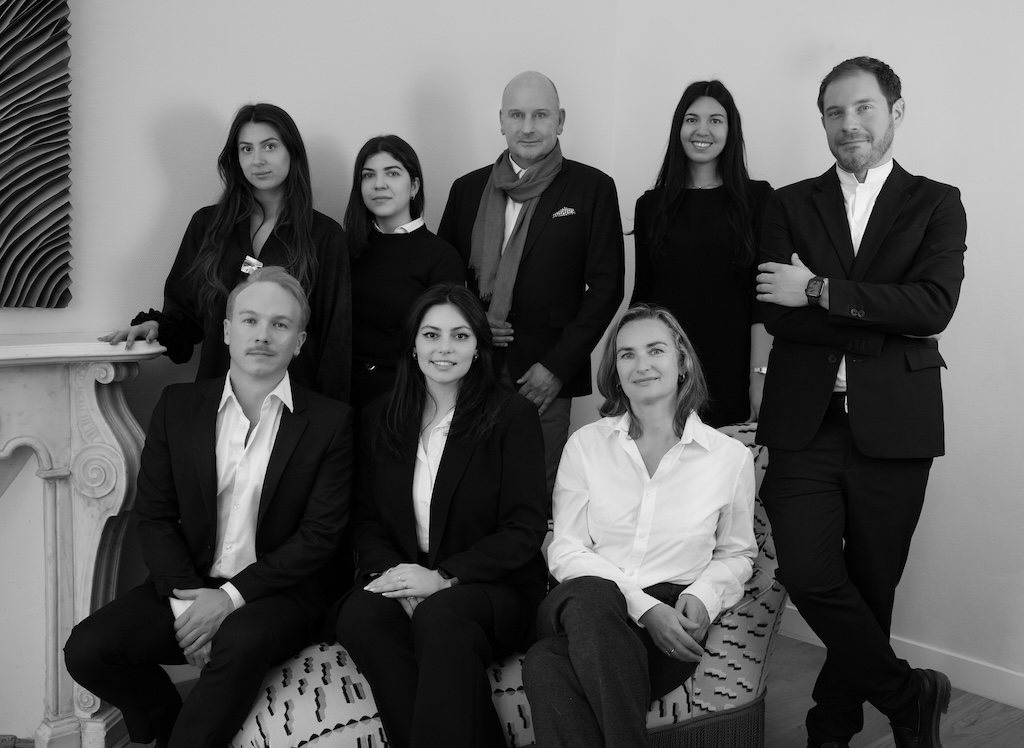
It honours Victoria Albar, the fifth generation of the family behind Maison Albar Hotels, reflecting a century-long commitment to hospitality that remains central to the group’s philosophy. Unlike many international luxury brands, Maison Albar continues to present itself first and foremost as a family business, one that favours warmth and personality over corporate uniformity.
Yet the name also pays tribute to another Victoria whose relationship with Nice helped shape the city’s destiny.
Queen Victoria became one of the most famous winter visitors to the French Riviera during the late nineteenth century. Her repeated stays attracted increasing attention from Britain’s aristocracy and affluent travellers, reinforcing Nice’s reputation as Europe’s winter salon. Hotels, villas and gardens flourished as the city developed around an international clientele seeking sunshine, culture and refinement.
By choosing the name Victoria, the hotel quietly connects itself to both histories: the family’s future and the city’s remarkable past. It is a subtle gesture, but an intelligent one.
A Secret Retreat in the Heart of the City
Despite occupying one of Nice’s most prominent locations, Maison Albar – Le Victoria describes itself not as a palace but as une villégiature secrète—a secret retreat.
It is perhaps the phrase that best explains the property’s character. The great Riviera hotels of the twentieth century often projected grandeur through scale. Monumental entrances, imposing façades and vast public rooms were designed to impress before guests had even checked in. Le Victoria takes another approach.
Stepping inside, the atmosphere shifts almost immediately. The bustle of the Promenade gives way to quieter spaces where light, texture and carefully considered proportions create a feeling closer to a private residence than a conventional hotel. This sense of discretion reflects a broader evolution within luxury travel.
Today’s traveller often values privacy over spectacle, authenticity over display and comfort over ceremony. The greatest luxury is no longer simply being seen; increasingly, it is the ability to feel entirely at ease. Maison Albar appears to understand that instinctively.
Rather than overwhelming visitors with extravagance, it encourages them to settle into the slower rhythms of Riviera living.
Designing a Contemporary Riviera
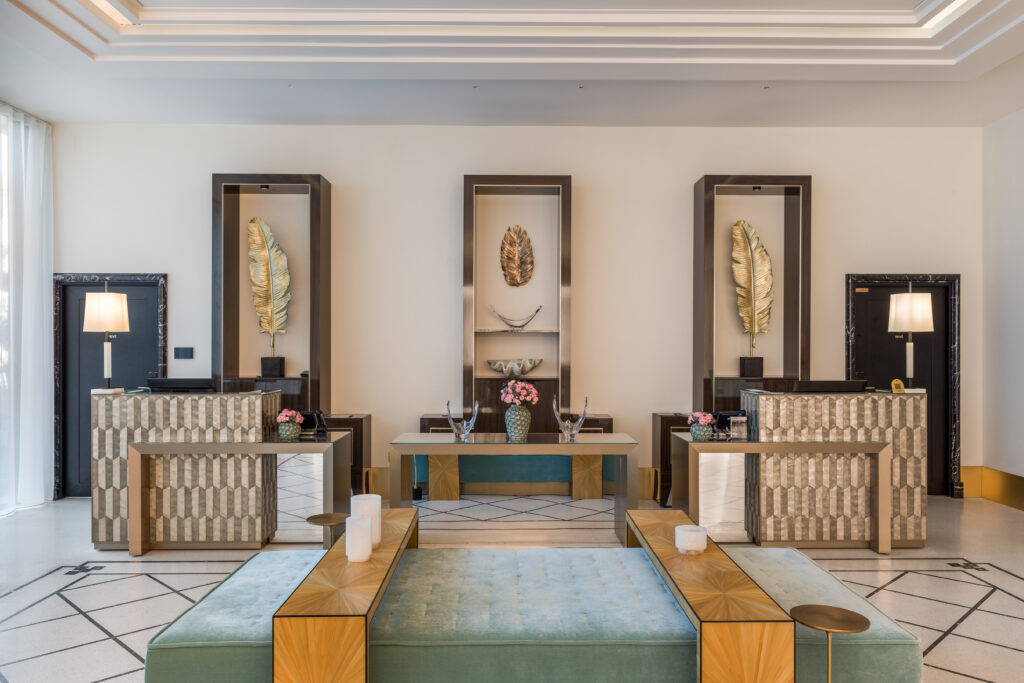
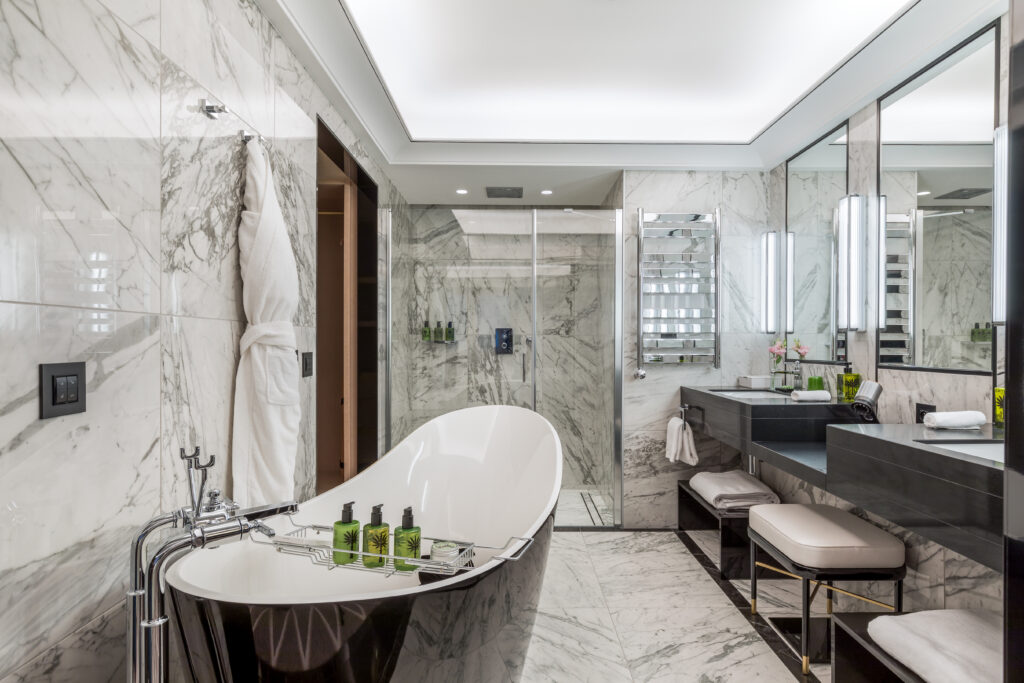
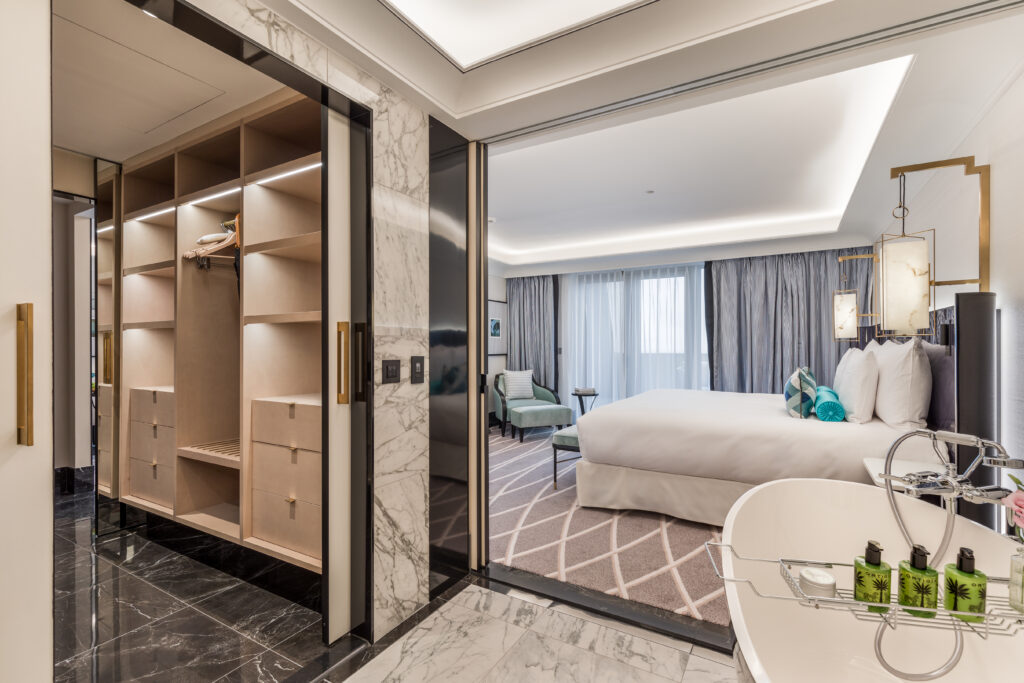
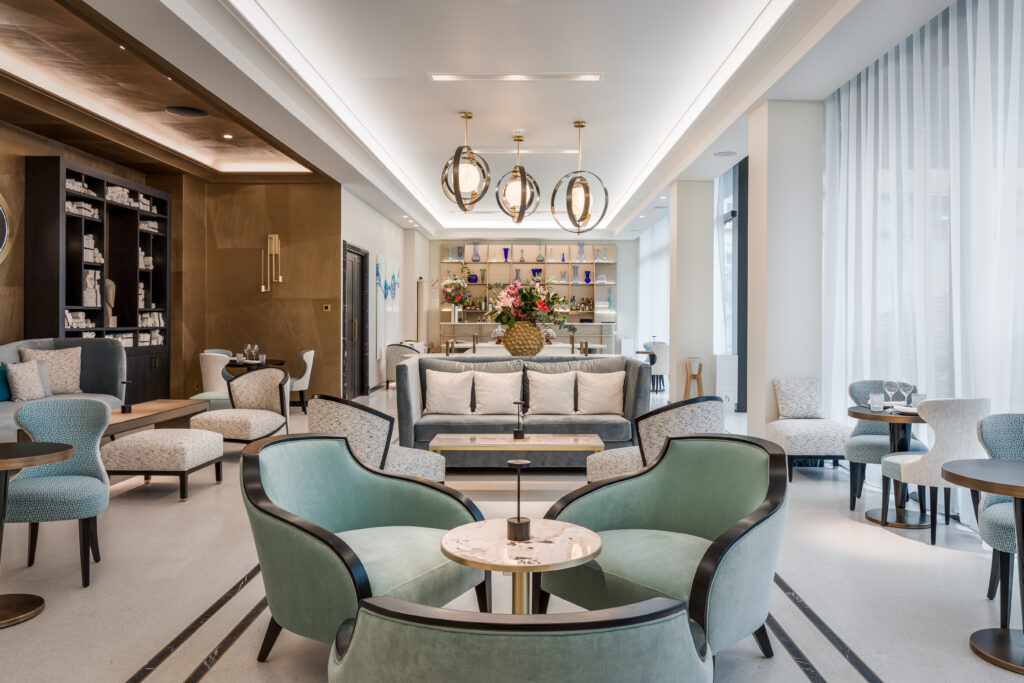
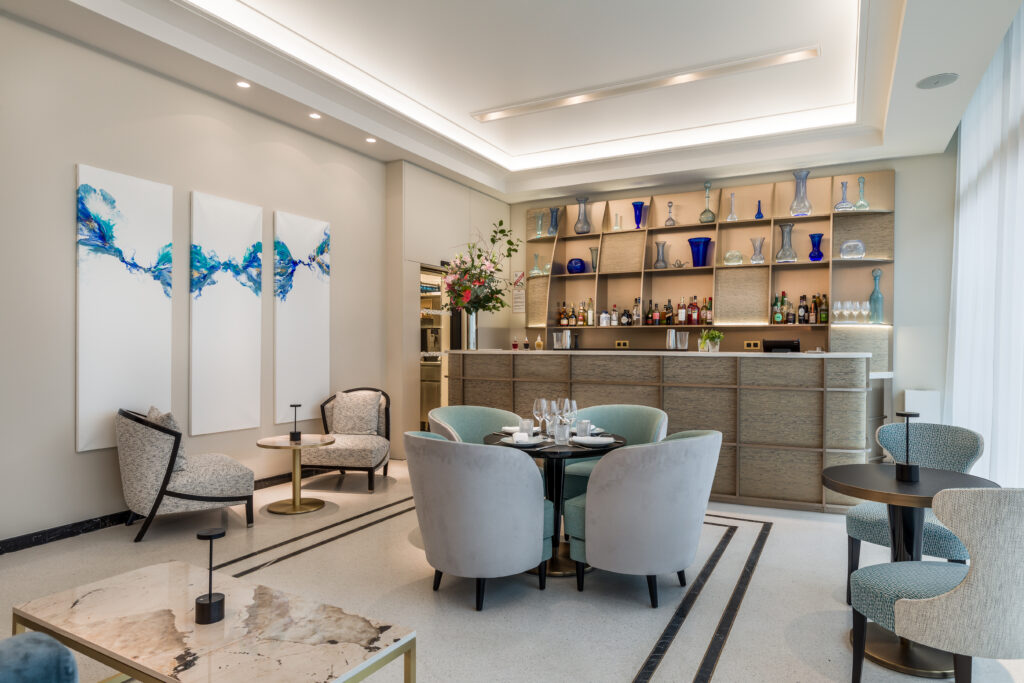
The interiors reinforce that philosophy at every turn. Created by GOMIS in collaboration with Studio MHNA, the design avoids nostalgia while drawing deeply from the architectural language of the Côte d’Azur.
There are echoes of the elegant villas that once lined the Riviera during the interwar years, references to the glamour of 1930s seaside holidays and subtle reminders of the yachts that continue to define Mediterranean living. Soft ivory tones, pale stone, lacquered finishes and carefully introduced shades of azure reflect the colours found just beyond the hotel’s windows.
Nothing feels literal. Instead, the design borrows emotions rather than motifs, creating spaces that feel unmistakably Mediterranean without resorting to clichés.
Throughout the hotel, art further anchors the property within its local setting. Works by emerging Nice artist Lorraine Bottin welcome guests in the Café Victoria, while limited-edition pieces by Isabelle Vialla-Simonou appear throughout the guestrooms. At the heart of the building, an extraordinary chandelier named Mimosa rises through the central staircase, handcrafted from bronze, Limoges porcelain and blown glass as a tribute to one of the Riviera’s most beloved flowering trees.
On the rooftop, a sculptural olive tree by French artisan Joël Rebière stands as a quiet symbol of longevity, peace and resilience—qualities that seem particularly fitting for a hotel built upon nearly two centuries of history. Rather than decorating the building, these artistic interventions help tell its story. Every detail contributes to a broader narrative about place, craftsmanship and contemporary Riviera culture.
And that is perhaps what distinguishes Maison Albar – Le Victoria from so many recent luxury openings. It does not attempt to reinvent Nice. Instead, it invites guests to rediscover it.
Between Sea and Sky
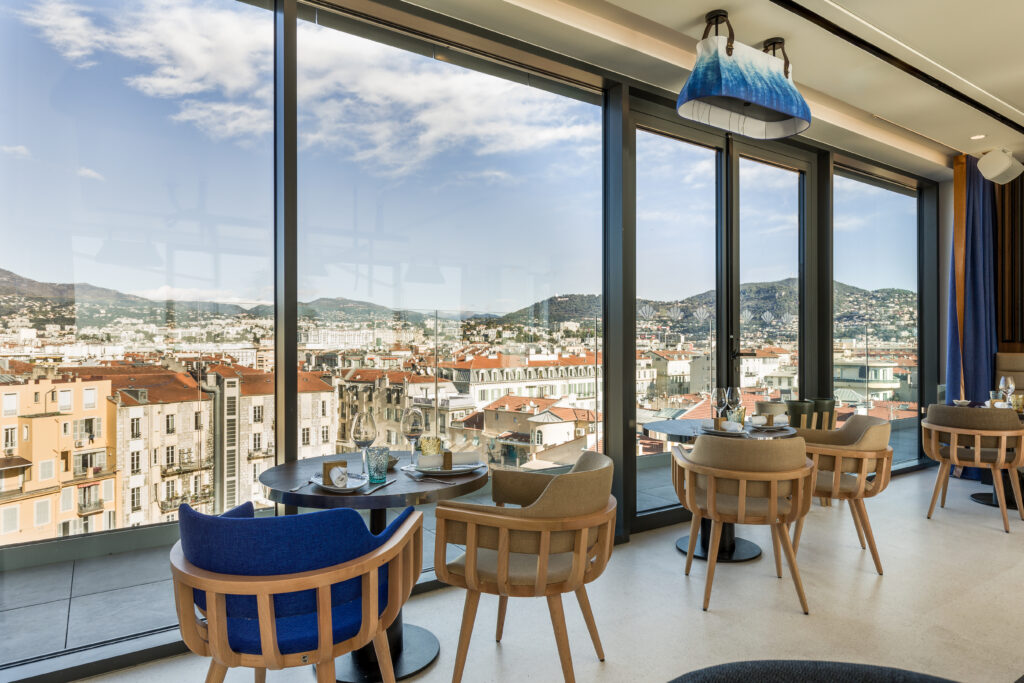
There is a particular quality of light that belongs only to Nice. Artists have attempted to capture it for centuries, drawn by the way the Mediterranean reflects against pale façades before dissolving into the distant hills of the Mercantour. It is a landscape defined not only by the sea, but by its remarkable geography—where mountains appear almost impossibly close to the coastline and every sunset seems to linger a little longer than expected.
Maison Albar – Le Victoria has been designed to embrace that setting rather than compete with it.
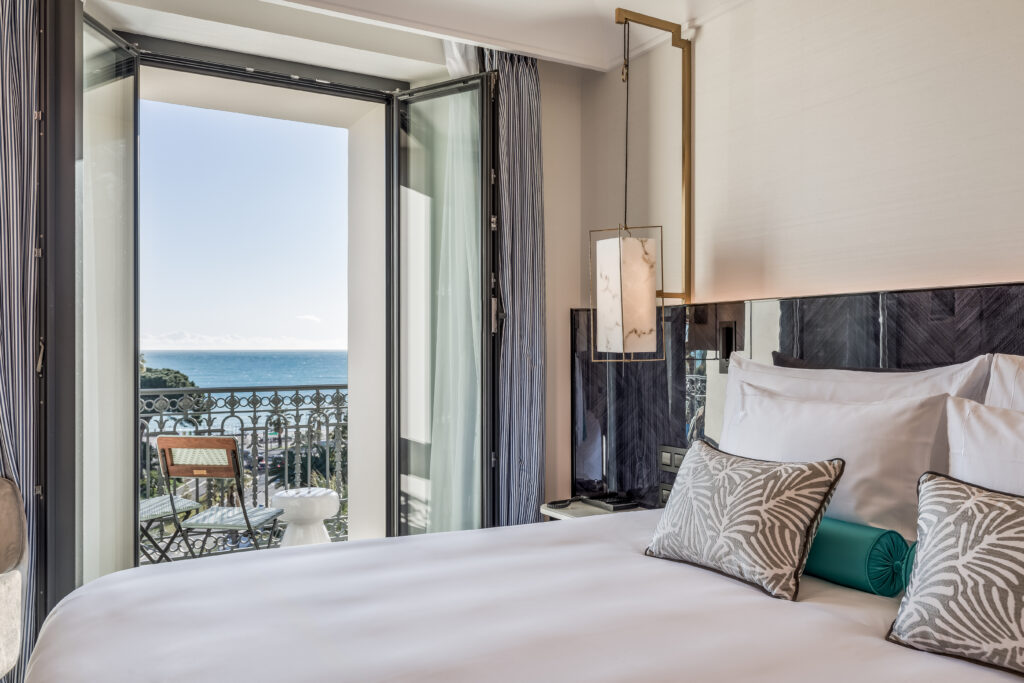
Its 102 rooms and 30 suites frame two equally compelling perspectives. To one side lies the endless horizon of the Baie des Anges; to the other, the layered rooftops and hills that have shaped Nice’s identity for generations. The interiors remain deliberately restrained, favouring natural materials, warm ivory tones, polished stone and carefully introduced shades of azure that echo the landscape beyond the windows.
The most memorable luxury here is not excess, but serenity.
Rather than overwhelming guests with ornament, the hotel allows the Riviera itself to become the focal point. Mornings begin with sunlight spilling across private terraces, while evenings are defined by the changing colours of the coastline below. It is luxury that feels lived in rather than performed.
A New Riviera Table
The French Riviera has always celebrated long lunches and unhurried dinners. Meals stretch effortlessly into the afternoon, conversations become part of the experience, and the distinction between restaurant and social gathering quietly disappears.
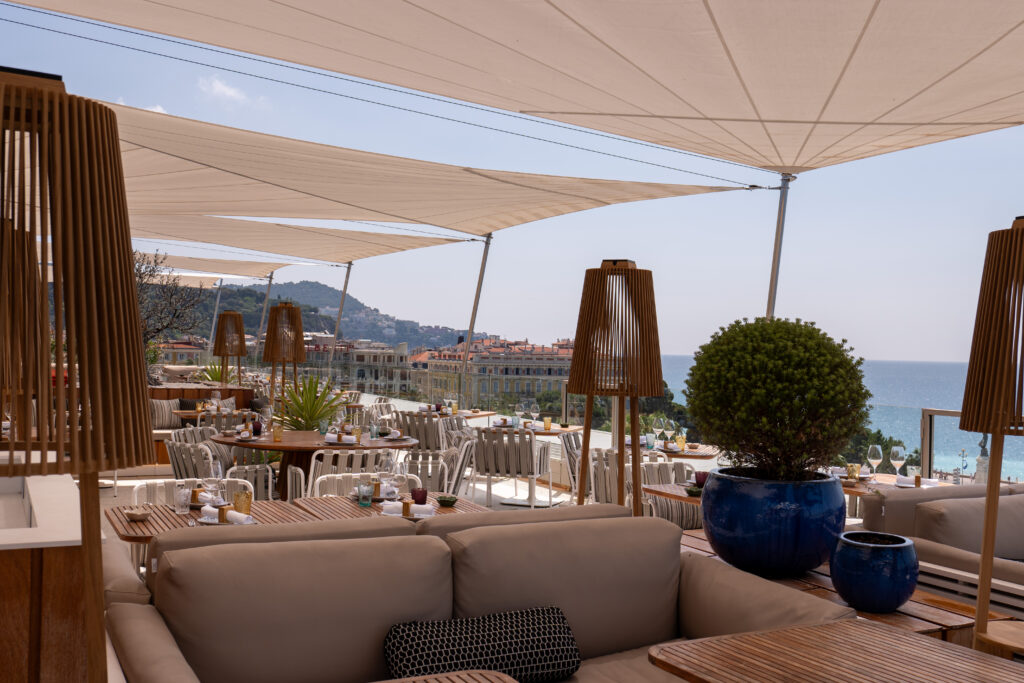
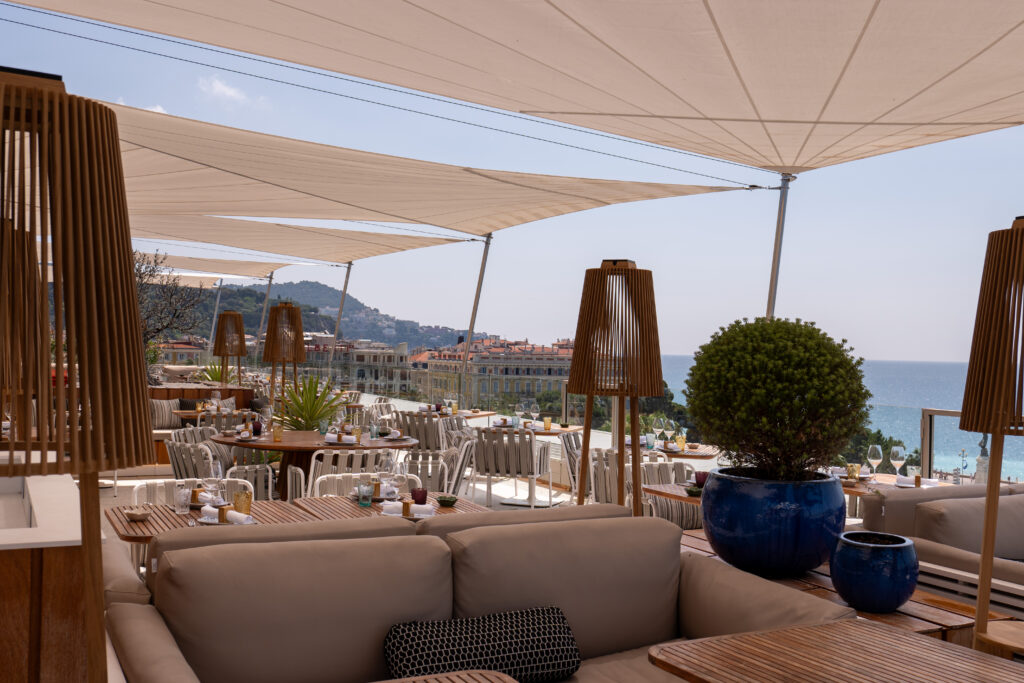
That philosophy finds its fullest expression at Taulissa. Perched above the city with panoramic views stretching from the Mediterranean to the hills of the Mercantour, the rooftop restaurant represents more than simply another destination for fine dining. It has been conceived as a place of conviviality—somewhere guests arrive to share rather than simply consume.
The culinary vision belongs to Glenn Viel, whose distinctive approach to modern French cuisine has earned international acclaim, working alongside Executive Chef Fred Grava, a long-standing collaborator whose understanding of Riviera produce shapes the restaurant’s daily rhythm. Together, they have created a menu rooted firmly in the region, drawing inspiration from local fishermen, market gardeners and artisan producers while allowing the seasons to dictate the direction of each dish.
There is generosity in that approach. Rather than pursuing theatrical gastronomy, Taulissa embraces abundance, simplicity and flavour. Dishes are designed for sharing, encouraging guests to linger around the table while the skyline gradually shifts from afternoon blue to the warm amber tones of sunset.
The atmosphere evolves almost imperceptibly throughout the day. Breakfast gives way to leisurely lunches, afternoons drift into aperitifs, and by evening the rooftop acquires the quiet energy that defines Mediterranean summers. Music accompanies conversation without overpowering it, while attentive service maintains an elegance that never feels formal.
It is perhaps the hotel’s greatest achievement that nowhere feels hurried. Time, like the view itself, seems to expand.
Wellness, Reimagined
Luxury hospitality has increasingly moved beyond indulgence towards restoration.
Modern travellers are not simply searching for beautiful places; they are seeking spaces that encourage genuine wellbeing, where slowing down becomes as important as seeing more.
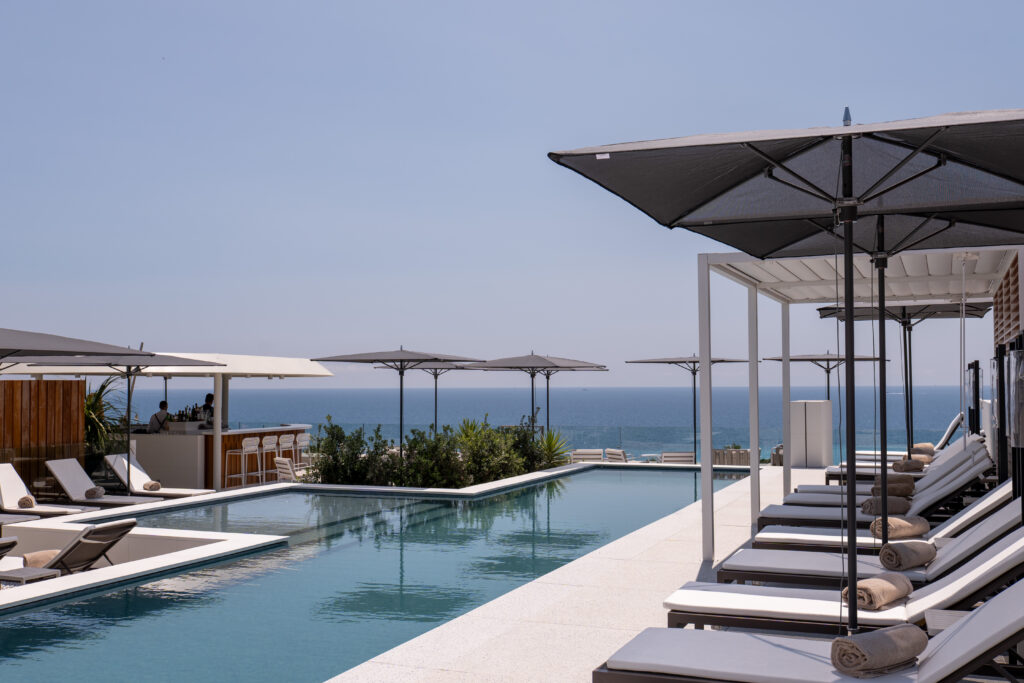
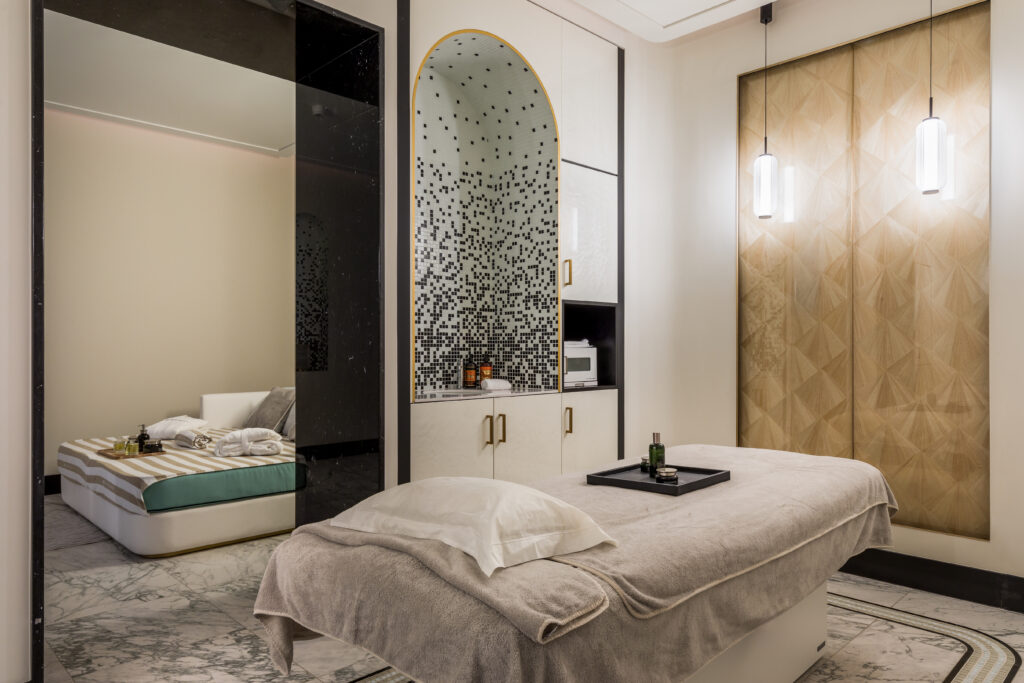
The Oria Spa embodies that shift. Named after the Latin word aurum—gold—the spa unfolds across 650 square metres beneath the hotel, where natural light filters through carefully designed interiors to create an atmosphere of remarkable calm. Treatments combine scientific innovation with established wellness traditions, while bespoke experiences encourage a more personalised approach to relaxation.
Yet the true luxury lies not in the facilities themselves, impressive though they are.
It lies in the philosophy. Rather than presenting wellness as a collection of treatments, Oria encourages guests to pause entirely. Whether through restorative therapies, quiet moments beside the indoor pool or personalised rituals tailored to individual needs, the experience feels intentionally unhurried.
There is something quietly refreshing about that restraint. In a world increasingly defined by constant movement, Le Victoria understands that the most valuable experiences are often the slowest.
A Hotel That Belongs to Nice
One of the most interesting aspects of Maison Albar – Le Victoria is that it does not isolate itself from the city around it.
Many luxury hotels function almost as private worlds, encouraging guests to remain within their walls. Le Victoria takes a different approach.
Its location naturally draws visitors into Nice itself. The Promenade des Anglais lies moments away, the Carré d’Or begins at its doorstep, Place Masséna and the Old Town are reached on foot, while museums, galleries and independent boutiques become extensions of the guest experience rather than optional excursions.
Even within the hotel, there is a deliberate sense of openness. Café Victoria welcomes locals alongside international visitors, while Taulissa has quickly established itself as a destination in its own right rather than simply the hotel’s restaurant. That relationship with the city gives the property an authenticity that cannot easily be manufactured.
It feels lived in. Perhaps that is the greatest compliment one can offer a newly opened hotel.
The New Golden Age of Nice
For much of the twentieth century, Nice was celebrated for its remarkable past. Today, it is increasingly admired for its future. The city has rediscovered its confidence—not through spectacle or reinvention, but through thoughtful restoration, cultural investment and a renewed appreciation for the qualities that first made it extraordinary. Historic architecture has been preserved rather than replaced. Independent restaurants sit comfortably alongside celebrated institutions. The rhythm of life remains unmistakably Mediterranean, yet increasingly cosmopolitan.
Maison Albar – Le Victoria feels perfectly attuned to that moment. Built upon nearly two centuries of history yet unapologetically contemporary, it bridges Nice’s aristocratic heritage with the expectations of today’s traveller. It honours the past without becoming nostalgic and embraces luxury without allowing it to become ostentatious.
In many ways, the hotel mirrors the city itself.
Confident rather than conspicuous.
Rooted in history while looking quietly towards the future.
As the French Riviera continues to evolve, destinations will inevitably rise and fall with changing fashions. Yet the places that endure are those that understand where they belong.Maison Albar – Le Victoria belongs not simply to the Riviera, but to Nice itself. And perhaps that is why it already feels less like a new hotel than a natural part of the city’s continuing story.
To see more from us, our news stories and blog posts, follow the link HERE. Additionally, if you want to keep up to date with the progress on our projects you can follow us on Instagram. We regularly post updates on our international projects!