La Réserve Ramatuelle
There are few places on the Côte d’Azur where glamour has become so closely associated with noise. Saint-Tropez has spent decades cultivating its reputation for superyachts, beach clubs, champagne lunches and famous faces, yet a short drive up into the hills of Ramatuelle reveals another version of the Riviera entirely.
Here, among umbrella pines, wild Mediterranean vegetation and the dry landscape of the Provençal garrigue, La Réserve Ramatuelle sits above the coast with the sea stretched out beneath it. The hotel is close enough to Saint-Tropez to belong unmistakably to its orbit, but sufficiently removed to feel like somewhere else. Even in high summer, its particular appeal is privacy. That distinction goes some way towards explaining the hotel’s enduring fascination. La Réserve Ramatuelle belongs to the world of Saint-Tropez, but it has little interest in performing for it.
A hotel with a slightly unusual past
The story of La Réserve Ramatuelle begins well before the current hotel arrived.
The site was developed in the 1970s as a curious, highly individualistic hotel known as Le Jas d’Alexis. Its rooms opened onto individual seawater pools, an idea that sounds almost absurdly luxurious even by contemporary Riviera standards. The project was ambitious but proved difficult to manage, and the property eventually fell into decline. For a period, the abandoned hotel became something of a forgotten landmark on the peninsula: shuttered, neglected and eventually occupied informally. Contemporary accounts have referred to it as the “hotel with twelve pools”, a rather evocative description of what was once an unconventional piece of Riviera hospitality.
The site’s revival came through Michel Reybier, whose hospitality group had already established a reputation for creating discreet, design-conscious luxury properties. Rather than erase the building’s history, the redevelopment retained much of the original structure and its relationship with the hillside.
La Réserve Ramatuelle opened as a five-star hotel in 2009, alongside a collection of private villas. The original property incorporated 27 hotel rooms and suites, with terraces or private gardens, as well as 12 villas across the wider estate. The building itself was conceived around the landscape: low, horizontal forms, large openings and a strong connection between the interiors and the Mediterranean outside.
There is something particularly Riviera about this second life. The peninsula has always attracted people willing to experiment with the idea of luxury, from the bohemian artists and writers of the mid-century period to the jet set who arrived later. La Réserve’s history contains a little of both: an eccentric 1970s experiment, a period of abandonment, and eventually a highly polished contemporary retreat.
The architecture disappears into the landscape
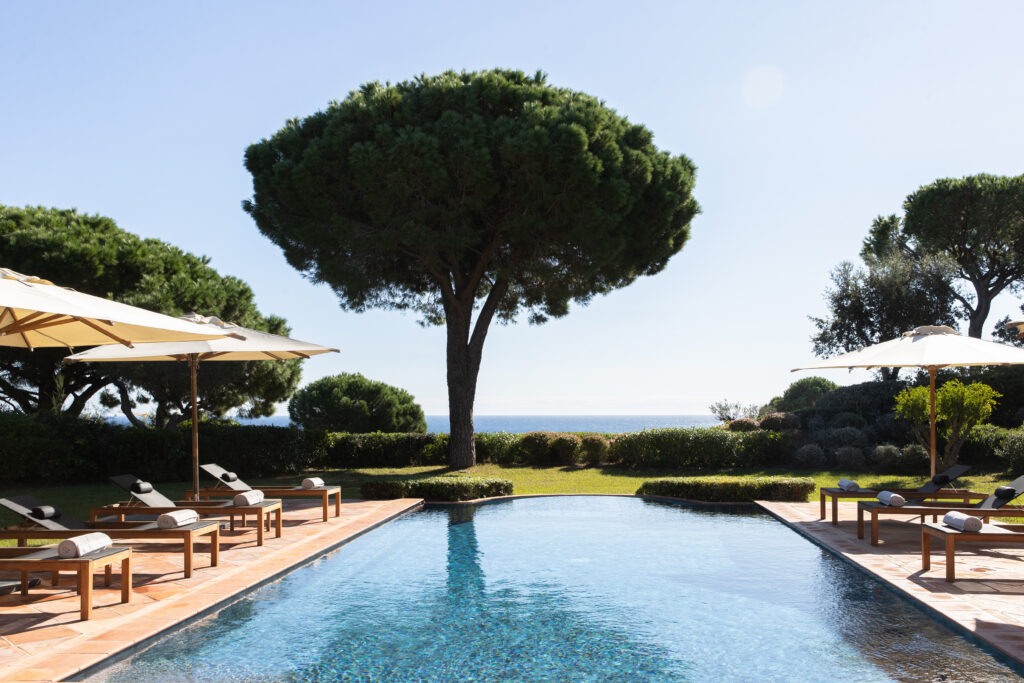
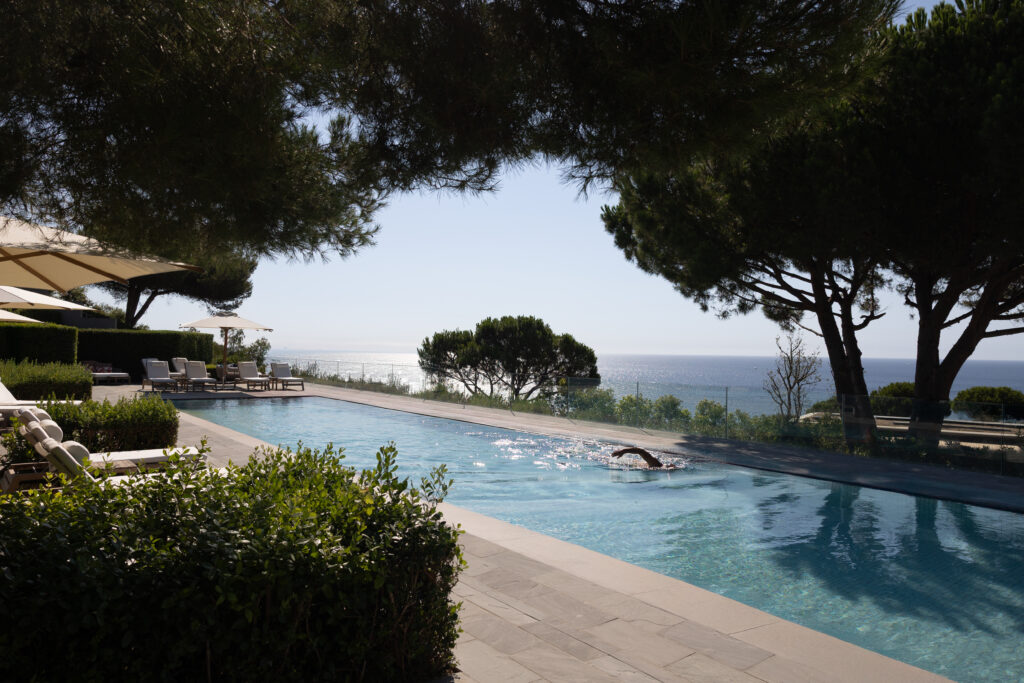
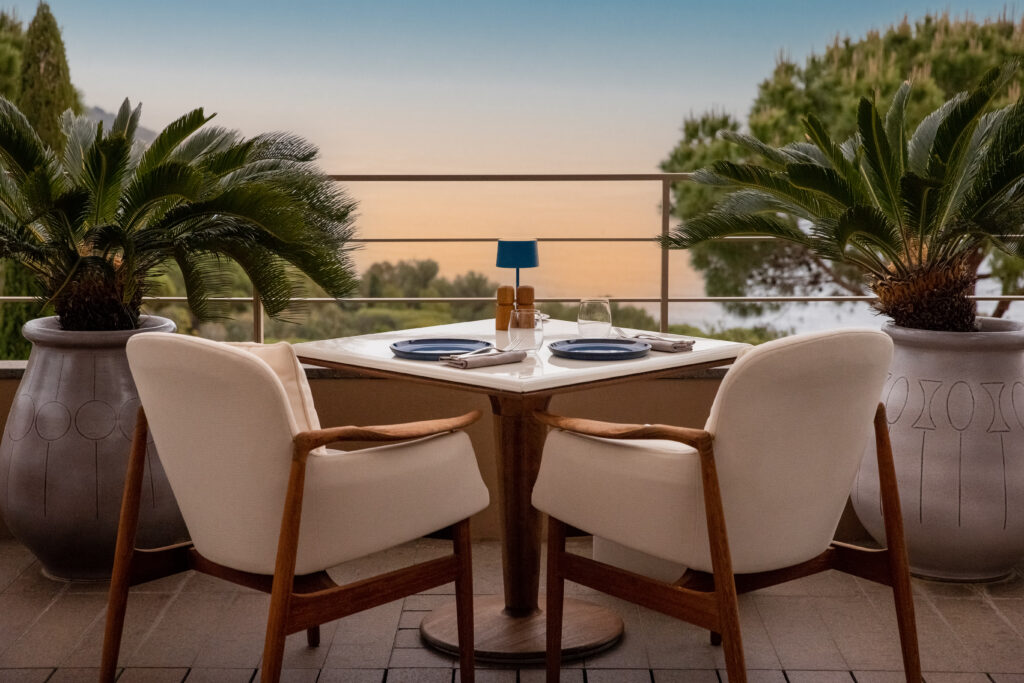
The first impression of La Réserve is remarkably calm. The hotel sits high above the Mediterranean, surrounded by holm oaks, umbrella pines and the rough vegetation characteristic of the Ramatuelle hills. From many of the terraces, the view is almost cinematic: deep blue sea, pale coastline and the hazy horizon beyond.
The original redevelopment deliberately preserved the building’s existing volumes and worked with its position rather than fighting against it. Natural materials and a restrained palette of ochre, white and sand allow the landscape to dominate.
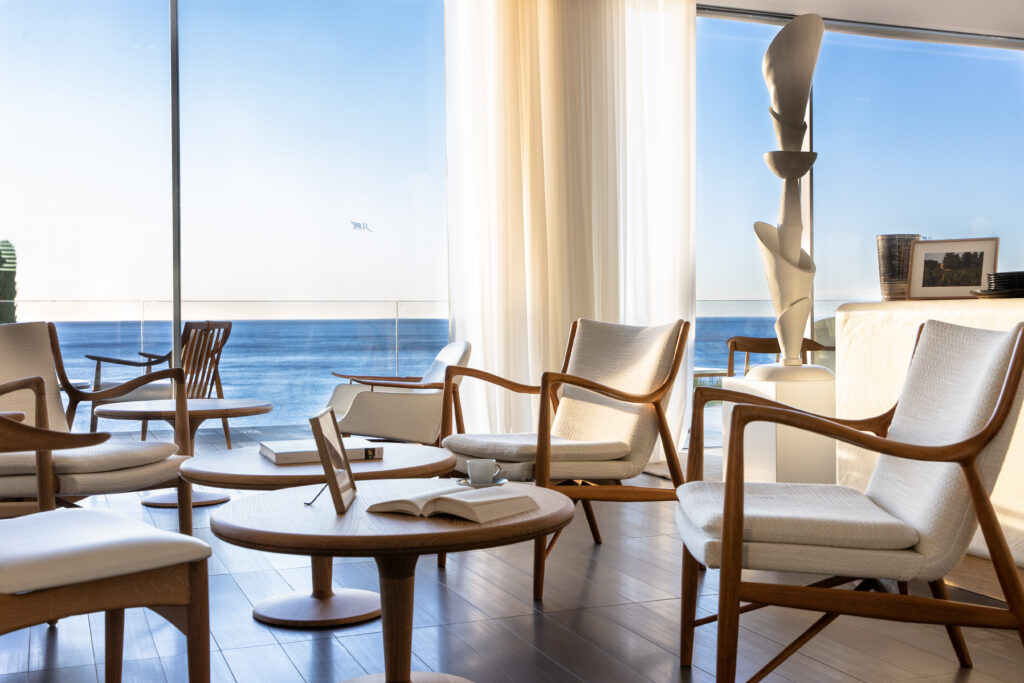
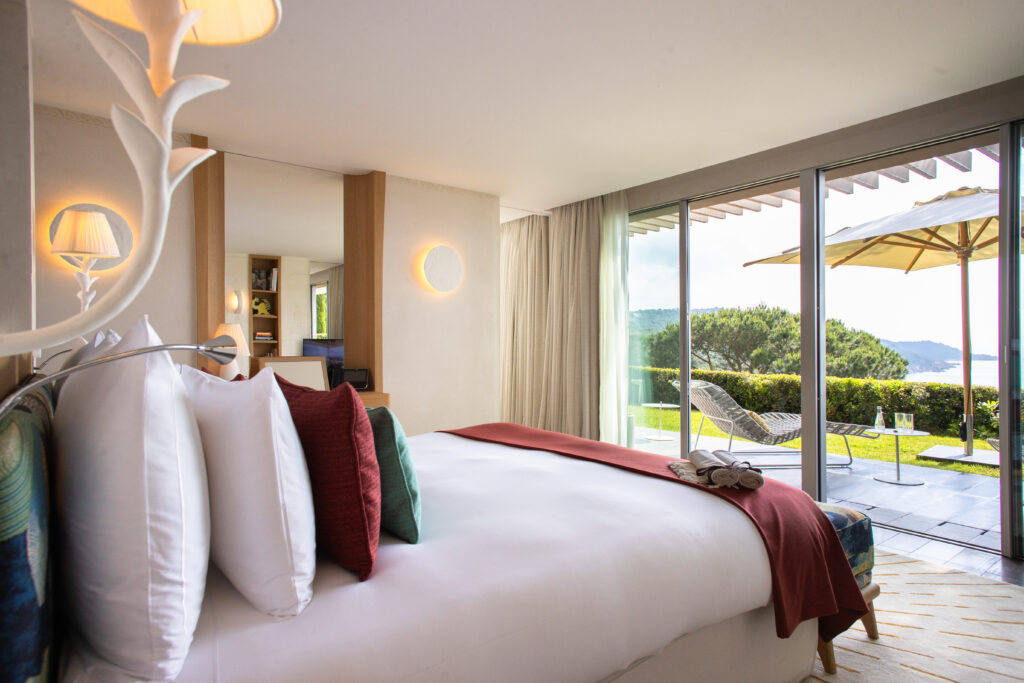
That relationship between inside and outside remains one of the hotel’s most successful qualities. Terraces become extensions of bedrooms. Large windows pull the Mediterranean light into the rooms. Garden paths lead between the buildings. The distinction between hotel and landscape becomes pleasantly blurred. It is a particularly French Riviera approach to luxury. The view does most of the talking.
The 1950s return
The most significant change to the hotel’s visual identity came with its later decorative transformation.
The interiors were reimagined around the spirit of the Côte d’Azur during the 1950s and 1960s, the period when the Riviera was becoming one of Europe’s great cultural playgrounds. This was the era of artists, writers, actors and designers spending long summers between Saint-Tropez, Cannes, Vallauris and the surrounding villages.
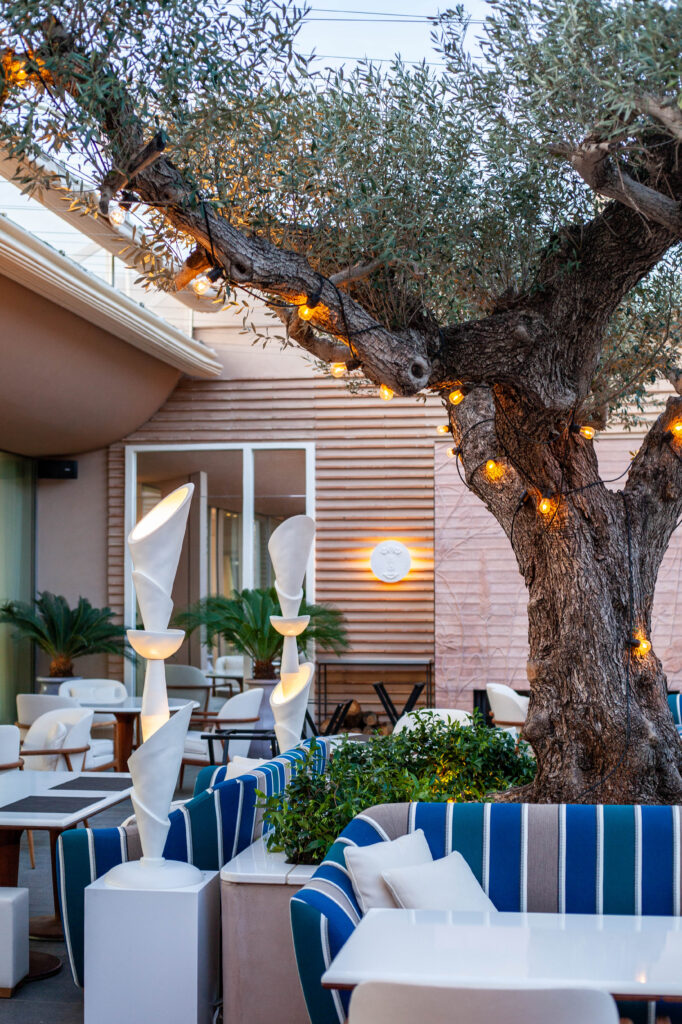
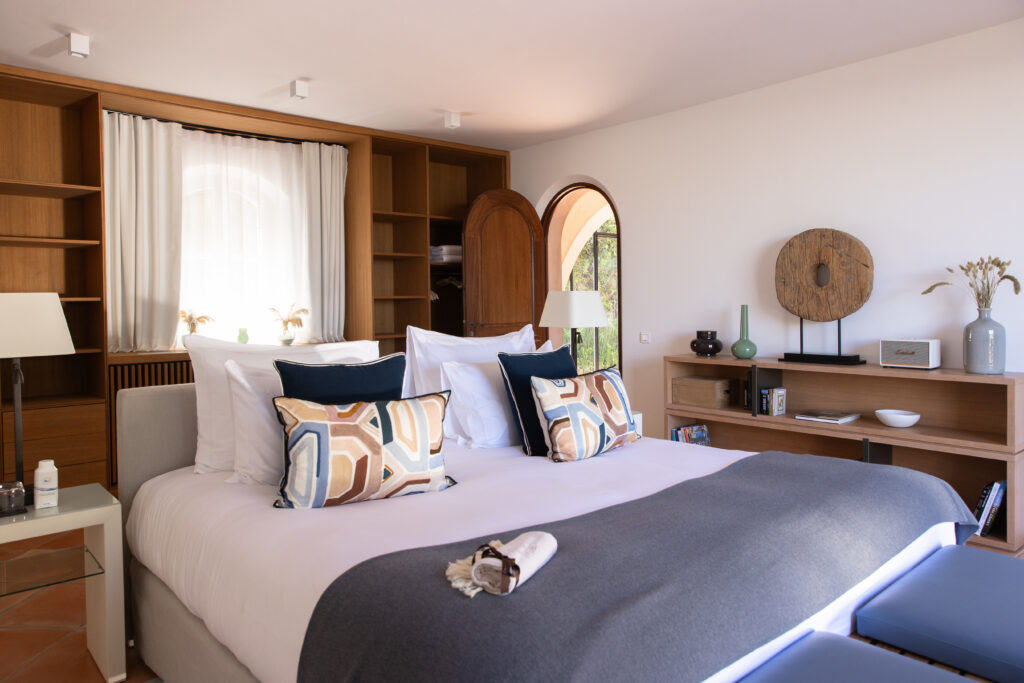
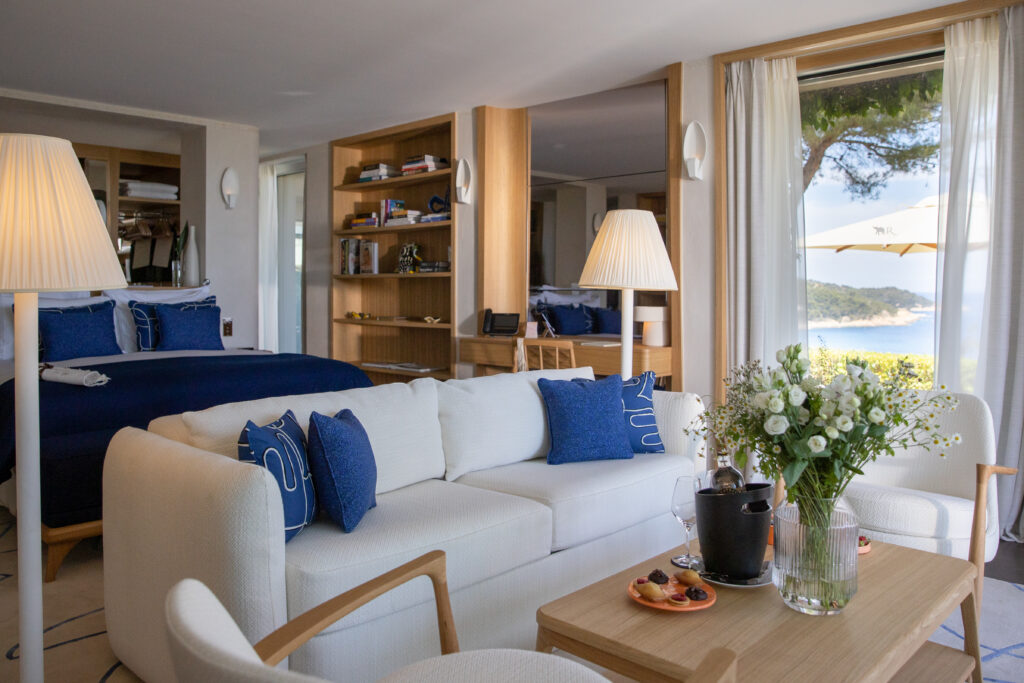
The aesthetic La Réserve adopted in response is wonderfully specific. White is everywhere, but rarely a single white. There are chalky whites, warm ivory, cream, beige and sandy tones, punctuated by Mediterranean blues and greens. Terracotta, ceramic, pale woods and white enamelled lava stone introduce texture without disturbing the sense of lightness.
It is easy to understand why this works so well in Ramatuelle. The Riviera’s intense sunlight can make elaborate interiors feel heavy very quickly. Here, the palette reflects the climate. Fabrics move in the breeze. Pale timber catches the light. Ceramics bring flashes of colour. Organic-shaped lighting reads almost like sculpture. The result feels closer to an exceptionally well-kept Mediterranean house than a conventional luxury hotel.
That feeling is important. The hotel has all the visual codes associated with high-end hospitality, but the rooms and communal spaces are designed to encourage lingering rather than admiration. Books, ceramics, art and carefully chosen objects give the interiors personality. There are pieces that look collected rather than specified, as though they might have accumulated over decades in a particularly cultured summer house.
The hotel’s 2021 decorative concept was explicitly inspired by the artistic and literary avant-garde that gathered on the Riviera during its mid-century golden age. The influence of figures such as Jean Cocteau, Picasso and the Vallauris ceramic tradition appears through artworks, ceramics and decorative details rather than through nostalgic reproduction.
That distinction gives the interiors their character. This is a fantasy of 1950s Riviera life filtered through contemporary luxury rather than a museum piece dedicated to it.
Vallauris, ceramics and the art of the South
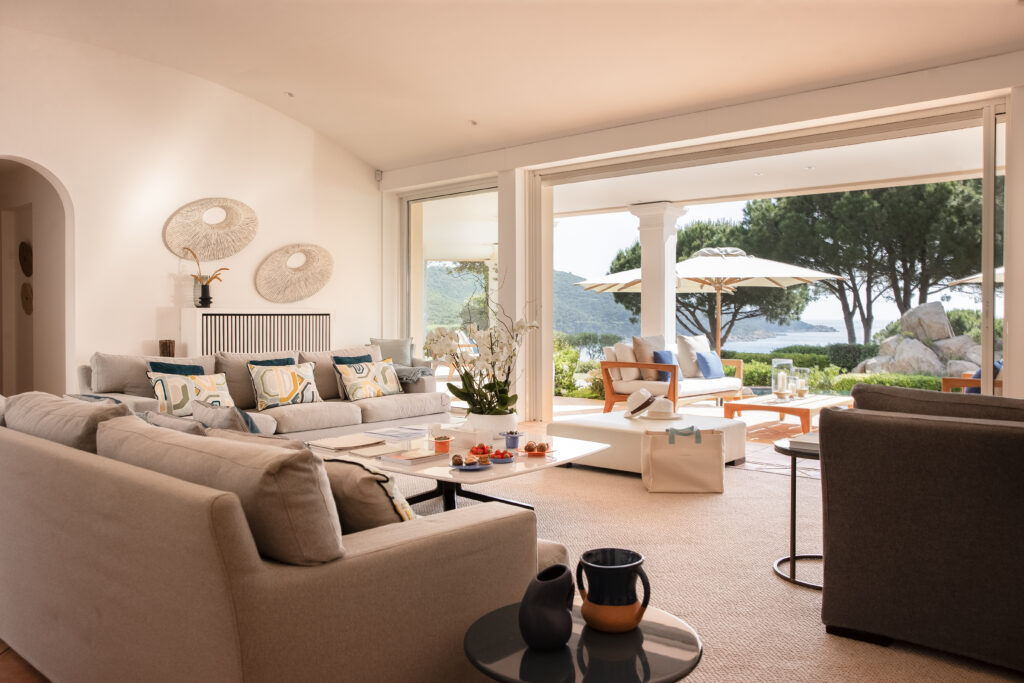
Perhaps the most convincing part of the aesthetic is its relationship with the decorative arts. During the post-war years, Vallauris became synonymous with ceramics, attracting artists who transformed pottery from a traditional craft into something more experimental and sculptural. The movement became part of the visual language of the Côte d’Azur itself.
La Réserve draws directly from that heritage. Ceramic vessels, handmade pieces, terracotta and coloured tiles appear throughout the interiors. Some of the most striking details are deliberately tactile: rougher surfaces against smooth ones, glazed ceramic against pale timber, woven materials against stone.
The effect is subtle but significant. In a hotel where the overall palette is deliberately restrained, texture becomes a form of decoration. The hotel also retains original pieces associated with Cocteau, including a collection of plates decorated with his distinctive drawings. Elsewhere, contemporary ceramic work and mosaics continue the dialogue with the region’s artistic heritage.
This is one reason the interiors feel convincingly connected to their location. Mediterranean design can easily become generic — linen, rattan, limestone, bougainvillea, repeat. La Réserve has enough cultural references to make the atmosphere feel specifically Provençal and specifically Riviera.
Who actually stays here?
The clientele is perhaps the most interesting part of La Réserve Ramatuelle. Saint-Tropez has always attracted extremes. On one side there is the spectacle: enormous yachts, celebrity beach clubs, late lunches and the annual migration of the international wealthy. On the other is the older Saint-Tropez of artists, fishermen, writers, local families and people who return every summer because they have been doing so for decades.
La Réserve belongs firmly to the second version of the luxury experience. That does not mean the clientele lacks glamour. Quite the opposite. Saint-Tropez remains a destination for the international A-list, with generations of famous visitors from Brigitte Bardot onwards. Tatler has described the town’s contemporary celebrity culture as a more rarefied form of fame, while noting the continued presence of figures such as Bardot and Joan Collins within the Saint-Tropez scene.
But La Réserve’s particular appeal is that people come here to escape the spectacle. The hotel is regularly described as one of the most exclusive properties in the area, positioned away from the crowds on a quiet residential hillside. Forbes has similarly characterised it as a privileged world removed from the bustle of Saint-Tropez.
This naturally attracts a certain kind of guest: affluent French and international travellers, established Riviera regulars, private clients, couples, families staying in the villas and people for whom privacy is more valuable than proximity to the party.
It is the sort of place where a famous person does not particularly need to announce that they have arrived. And that is perhaps more telling than a list of celebrity names. The hotel does not appear to trade heavily on a public roll call of famous guests, which feels entirely appropriate. In a destination where celebrity sightings can become an attraction in themselves, La Réserve has built much of its identity around discretion. The luxury is there for the people staying, rather than for everyone else to photograph.
The Saint-Tropez aesthetic, without the costume
There is a particular danger when designing around the idea of Saint-Tropez: the temptation to turn the destination into a collection of clichés.
La Réserve largely avoids that. There are no desperate attempts to recreate a 1960s beach party. Instead, the hotel looks at what made the era attractive in the first place: sunlight, good materials, art, long lunches, Mediterranean landscapes, informal elegance and the pleasure of having nowhere else to be.
This is why the interiors sit comfortably between modernism and Provençal living. The clean architectural lines give the hotel a contemporary foundation. Against them, softer materials and handmade objects provide warmth. The white backdrop creates space for artwork and ceramics. Pale timber introduces a quieter Scandinavian note. Terracotta brings the colour of the earth indoors.
There is also a wonderful confidence in the lack of visual clutter. The Mediterranean provides so much visual drama outside that the interiors do not need to compete with it. The sea remains visible. The vegetation becomes part of the composition. Shadows move across walls and terraces during the day. At sunset, the entire palette changes. In that sense, the hotel’s greatest decorative asset is something no designer can manufacture: the light.
Beyond the hotel room
La Réserve Ramatuelle has developed into something closer to a private Mediterranean estate than a conventional hotel. The villas are particularly important to this identity, offering a greater degree of privacy and independence. The property also has a substantial spa and wellness offering, multiple dining spaces and access to La Réserve à La Plage on Pampelonne.
At the hotel itself, dining remains an important part of the experience. La Voile, led by chef Eric Canino, earned two Michelin stars in 2020, establishing the restaurant as one of the gastronomic destinations of the peninsula. Its cuisine follows the same philosophy as the interiors: Mediterranean, precise and heavily dependent on the quality of relatively simple ingredients.
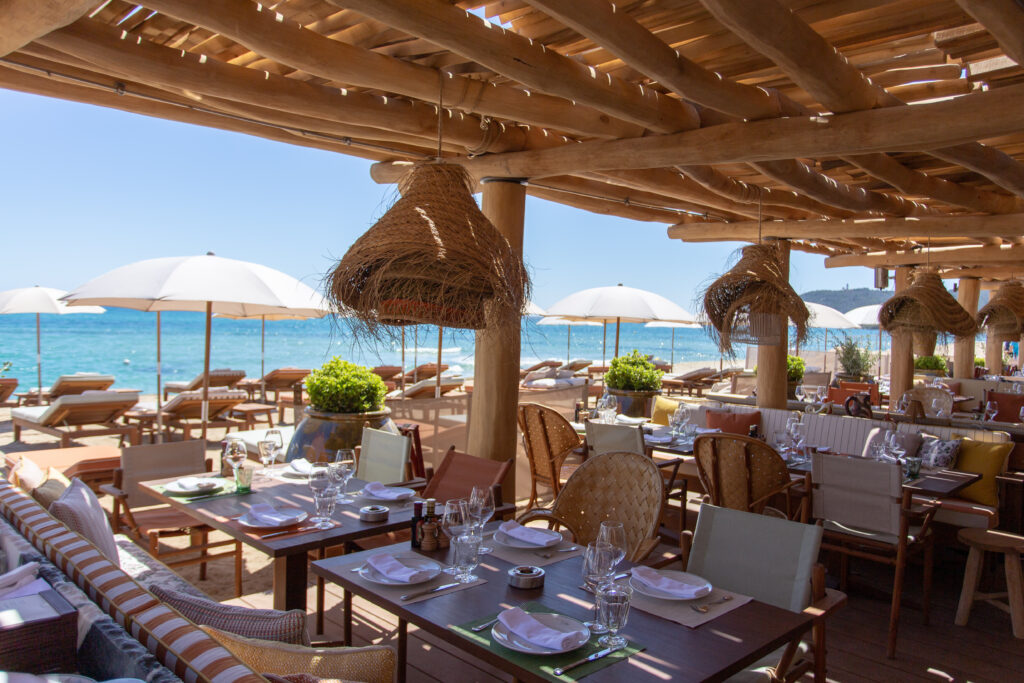
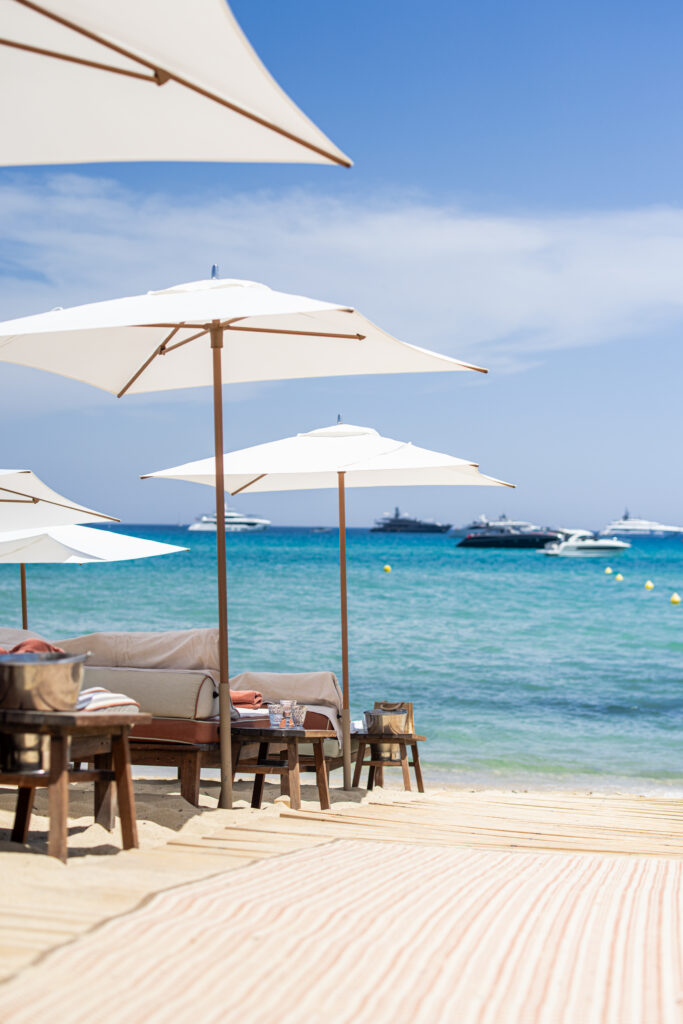
Down at Pampelonne, La Réserve à La Plage offers another expression of the brand. The mood becomes more relaxed, with the sand, sea and long lunches replacing the quiet formality of the hilltop property. The beach address extends the hotel’s relationship with Saint-Tropez itself while maintaining its preference for understated elegance. The contrast is useful. La Réserve Ramatuelle is about retreat; La Réserve à La Plage is about participating in the Riviera summer. Together, they cover both sides of the Saint-Tropez fantasy.
A modern idea of Riviera glamour
There is something slightly old-fashioned about La Réserve Ramatuelle, but in the best possible sense. The hotel belongs to a vision of luxury in which time is still allowed to pass slowly. Breakfast can become lunch. Lunch can stretch into the afternoon. A swim becomes an aperitif. A terrace becomes the day’s main destination.
That philosophy feels increasingly relevant. The contemporary luxury traveller has endless access to spectacle. There are more restaurants, more beach clubs, more yachts, more events and more ways to document a holiday than ever before. Against that background, privacy becomes a genuine luxury. La Réserve Ramatuelle understands this instinctively.
Its design does not demand attention. Its setting does. Its history gives it intrigue. Its art gives it personality. Its interiors provide a sense of place without overwhelming the landscape. And its clientele reflects a quieter end of the Saint-Tropez social spectrum: people who can afford the spectacle but have increasingly little need for it. The hotel has also managed something surprisingly difficult: it has created a contemporary version of the Riviera’s golden age without becoming trapped by nostalgia.
The 1950s and 1960s are present in the ceramics, the art, the palette and the easy relationship between inside and outside. Yet the experience belongs firmly to the present. The rooms are private, the wellness offering is sophisticated, the service is discreet and the landscape remains the star. Perhaps that is the real appeal of La Réserve Ramatuelle. Saint-Tropez has spent seventy years becoming famous for being seen. La Réserve offers the increasingly precious alternative: somewhere beautiful enough that you can simply disappear into it.
And high above the Mediterranean, with the cicadas in the trees and the sea stretching towards the horizon, disappearing starts to look rather glamorous.
To see more from us, our news stories and blog posts, follow the link HERE. Additionally, if you want to keep up to date with the progress on our projects you can follow us on Instagram. We regularly post updates on our international projects!